Ethical AI to
Amplify Creativity
and Cultivate
Human Potential
OpenAI alum Jay Dixit, who taught writing and storytelling at Yale, helps knowledge workers, companies, and universities harness AI to amplify human creativity — without outsourcing the thinking.
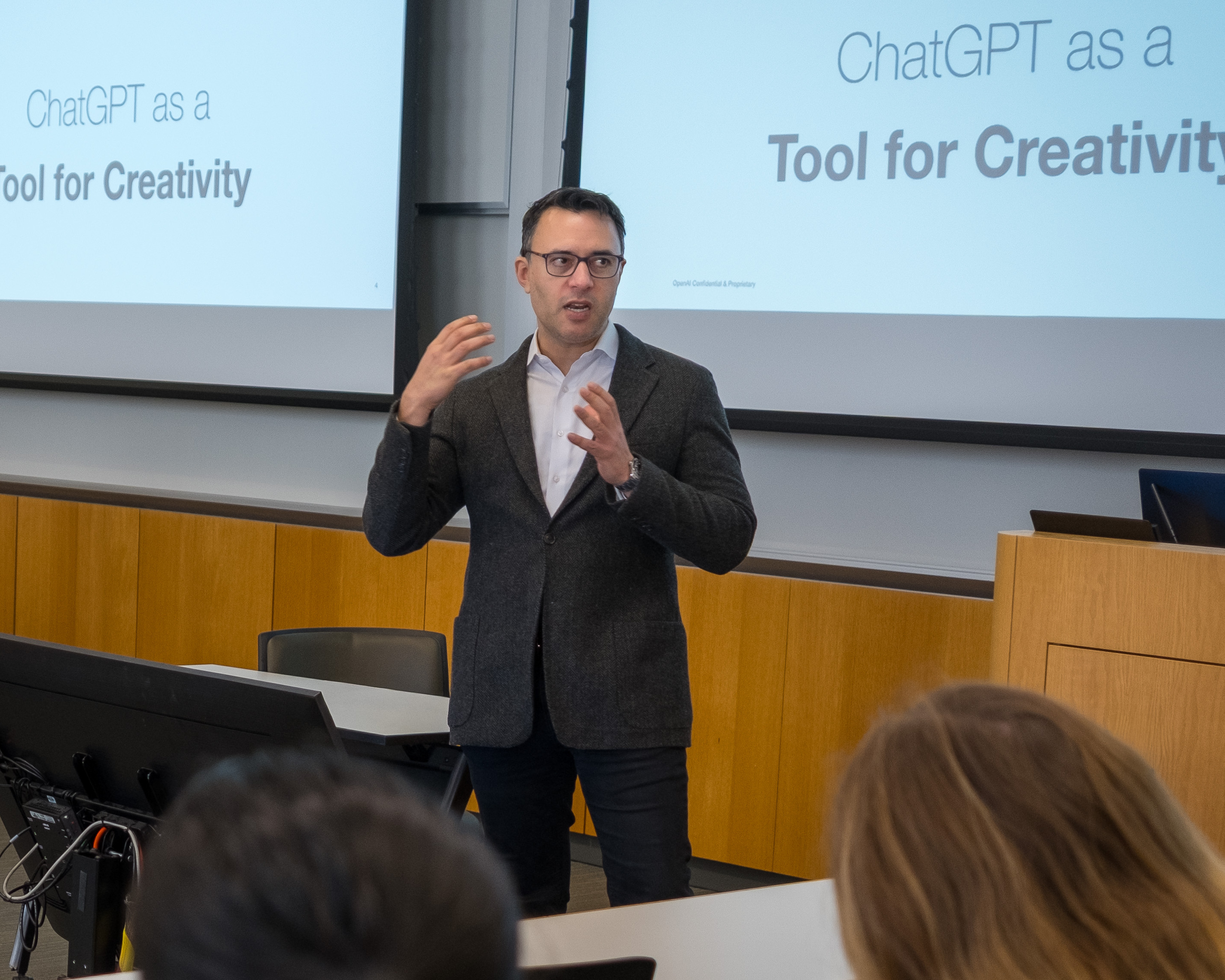
I believe human creativity is sacred and special. I teach people how to use AI to nurture and amplify their own creativity, rather than outsourcing the writing and thinking to AI.
What institutions get
Keynote speaking
Faculty development
Curriculum consulting
Student workshops
Policy development
How My Socratic Questioning Approach Helped Inspire ChatGPT Study Mode
Spring 2024: Interviews with Writers and Educators
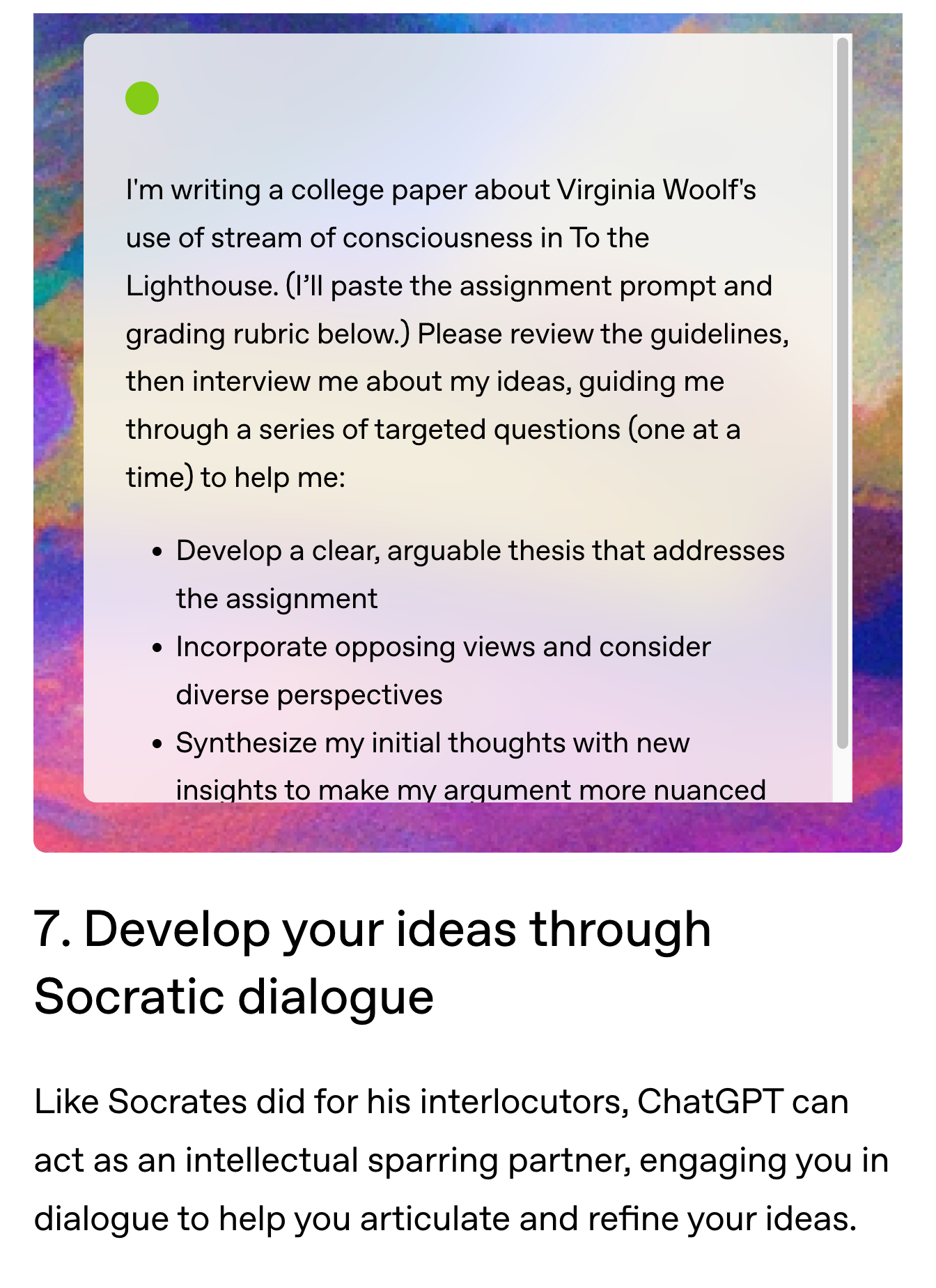
Inspired by my interviews with writing community members like Stew Fortier and Ken Liu, I begin exploring how to use AI to ask questions instead of just providing answers. The idea is simple: Flip the script and let AI ask the questions for a change.
Summer 2024: I Develop the Socratic Framework
I refine the “Socratic approach” through conversations with novelists, screenwriters, and writing professors. My radical idea: Rather than ban AI, we should teach students how to use AI to challenge and deepen their thinking.
Fall 2024: I Publish My Student Guide
I document my approach in the Student Writing Guide I publish on OpenAI.com in fall 2024, providing examples and strategies for educators and students.
AI Should Amplify Thinking, Not Outsource It
My philosophy — that “productive struggle” is important to learning and that students should “use AI as a tool, not an answer machine” — becomes central to OpenAI’s education messaging.
August 2025: Inspiring a New Product
My Socratic approach helped inform and inspire a new product: ChatGPT Study Mode. Designed to foster deeper understanding, Study Mode asks Socratic-style questions and offers step-by-step guidance instead of quick answers. (Just to be clear: A “tutoring mode” — “Hey ChatGPT, teach me about ionic bonds” — was already in the works. The Socratic questioning was my contribution.)
Study Mode Launched
With the launch of Study Mode, “Socratic-style questions” become a core feature of ChatGPT — bringing my educational approach directly into the product that tens of millions of students now use every day.
A New Approach to AI in Education
In education, the focus is often on policing, detecting, and preventing AI misuse. Few are teaching students how to use AI well — ethically, responsibly, not as a shortcut but as a tool to challenge and deepen thinking.
AI not as a ghostwriter, but as an iterative thinking partner. A sounding board you can use to talk out your ideas and find your way forward.
What students learn:
- Surface ideas, examples, and stories from their own experience
- Express ideas with clarity and force — without AI writing for them
- Iterate using feedback to strengthen their work
- Finish projects with structure and accountability
- Learn and master thinking and writing skills over time
Most people use AI to do the work for them. I teach people how to use AI to elevate the work only humans can do.
I guide people on how to use AI in ways that nurture critical thinking, support the creative process, and help us surface our best ideas — without outsourcing the curiosity, creativity, and self-expression that make us human.
Outsourcing the writing:
“Here’s my assignment. Generate a draft for me.”
Outsourcing the thinking:
“Suggest a nuanced thesis statement I can use.”
Socratic AI:
“Ask me tough questions to help me clarify my argument.”
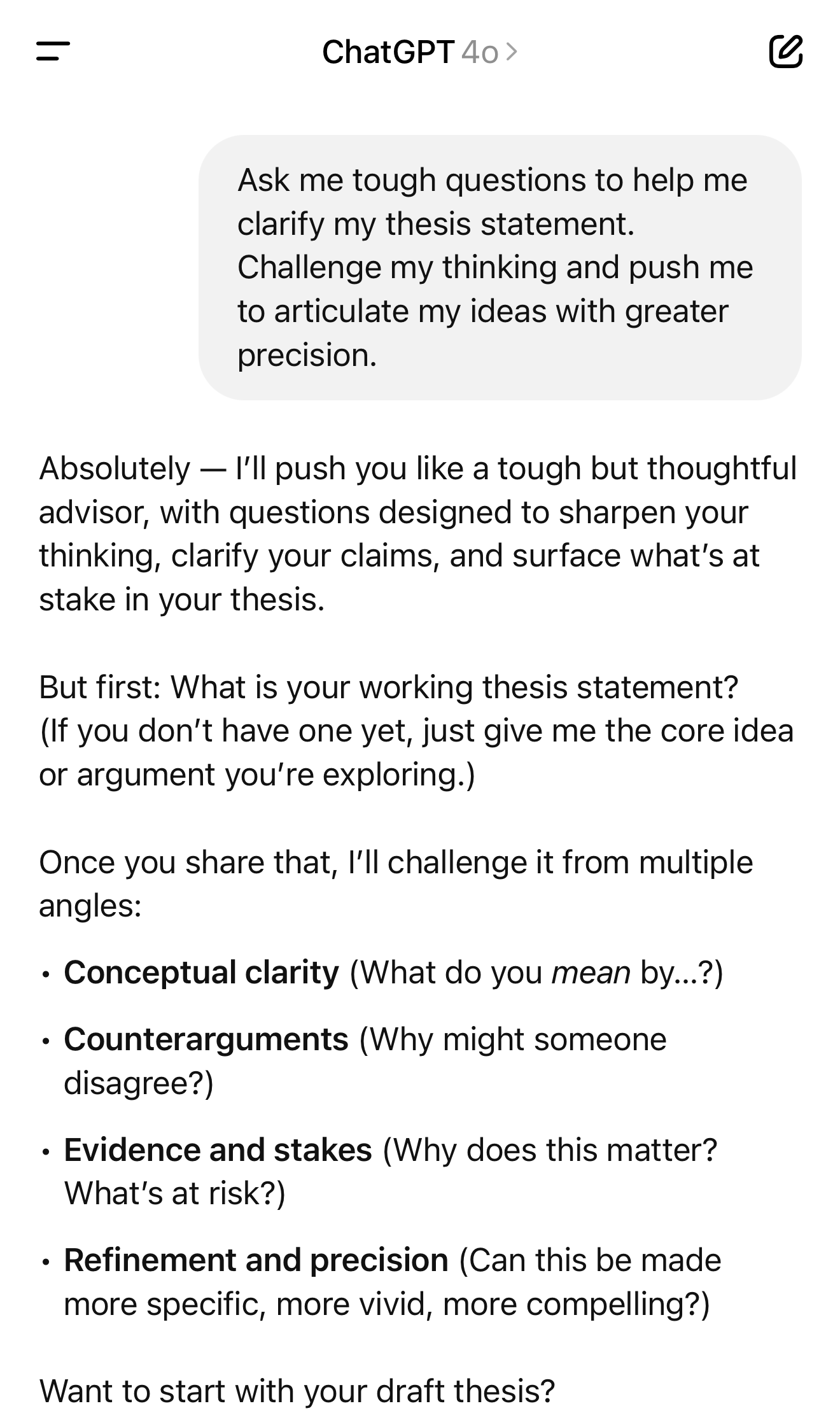
Students Are Using AI to Avoid Thinking. Here’s My Solution.
Meet Jay Dixit
Jay Dixit is the creator of the “Socratic AI” framework — a human-centered approach that reframes AI not as a shortcut to outsource thinking, but as a tool to amplify human creativity.
OpenAI Leadership
As Head of Community for Writers at OpenAI, Jay spearheaded efforts to guide writers, educators, and students on ethical AI use. His framework has been adopted by educators at Harvard, Wharton, Babson, Simon Fraser University, and California State University.
Distinguished Writing Career
Award-winning writer who taught at Yale and whose work appeared in The New York Times, Rolling Stone, Harvard Business Review, and Psychology Today. Conducted George Carlin’s final interview and won The Moth storytelling competition.
Educational Impact
Led AI literacy workshops at Harvard, Wharton, Columbia, and The Poynter Institute. Authored OpenAI’s flagship education resources and defined key messaging presented by CEO Sam Altman.
Practical strategies for moving beyond policing AI — what actually works when you’re teaching 200 students or managing a team that’s already using ChatGPT.
Ethical AI Framework
Developed the “Socratic AI” approach that frames AI as a thinking partner, not a shortcut — preserving human creativity while amplifying our capabilities.
Measurable Impact
Trained 200+ educators and impacted 10k+ students across universities like Harvard, Columbia, and Wharton with practical AI strategies.
Award-Winning Expertise
Award-winning journalist for The New York Times, Rolling Stone, and more, bringing storytelling expertise to AI education.
Custom AI Policy Development
Helps campuses move beyond policing and detection by setting clear norms for AI use that protect learning and thinking.
AI Literacy Training Programs
Learn practical ways to integrate AI into curriculum and coursework — teaching AI use as a skill to deepen thinking and protect learning, without turning it into a shortcut or prose generator.
Socratic AI’s 5 Principles for Students
01 Think Beyond Academic Integrity
Move past the simple “cheating vs. not cheating” binary. Academic integrity is the bare minimum — students need guidance on using AI to challenge their thinking and deepen their learning.
02 Define Your Educational Goals
College isn’t just about getting grades and credentials. It’s about developing the intellectual skills you’ll need to thrive in an uncertain future. So think about the kind of person you want to be when you graduate — and what you need to do to get there.
03 Don’t Outsource the Thinking
Use AI to challenge and deepen your thinking, not replace it. Think of AI not as a shortcut, but a thinking partner that questions, probes, and pushes you to articulate your best ideas.
04 Do the Hard Parts Yourself
Growth happens in moments of “desirable difficulty.” Don’t retreat to AI when things get hard — that’s when the learning happens.
05 Be Thoughtful About Your Choices
Used thoughtfully, ChatGPT can make you smarter. It’s all about how you use it. So make a point to use it in ways that make you a stronger scholar, thinker, and writer.

How I Can Help Your Institution
I help educators move beyond policing and detection — and teach students how to use AI as a thinking partner: to challenge and deepen their thinking, without outsourcing it.
Keynote Speaking
Talks with stories, research, and live demos that reframe AI: not as a ghostwriter, but as a thinking partner.
Faculty Development
Faculty training on how to redesign assignments, write AI policies that make sense, and steer students toward using AI for feedback that challenges their thinking — not shortcuts that bypass it.
Curriculum Consulting
Strategic guidance on integrating AI literacy across disciplines while maintaining academic integrity and promoting critical thinking skills.
Student Workshops
Interactive sessions that teach students the “5 Principles” framework for using AI ethically and effectively to expand their thinking and deepen their learning.
Policy Development
Help your institution craft nuanced AI policies that go beyond simple “don’t use it” rules to create guidelines that support learning.
Research Collaboration
Partner with your team on AI education research, bringing real-world expertise to academic inquiry and publication.
Core Philosophy
The Socratic AI Approach
A human-centered methodology that reframes AI as a collaborative thinking partner — one that challenges assumptions and helps humans articulate their best ideas.
Academic Excellence
Trusted by elite institutions worldwide
Proven Impact
Measurable results that matter
Ethical Leadership
Human-centered by design
- Transparency first
- No shortcuts
- Human creativity
Ethical AI Talks & Workshops
I shared this approach in a PopTech talk and a Q&A with Dan Ariely on productive struggle in creativity.
Keynote reframing AI as a thinking amplifier — perfect for faculty summits, ed-tech conferences, and leadership retreats.
Hands-on workshop covering prompting strategies, disclosure forms, and the Socratic AI framework for responsible AI use.
Turn memory checks into reasoning workouts and safeguard learning integrity with practical classroom strategies.
Real classroom strategies that turn AI into a springboard for critical thinking rather than a shortcut to answers.
Stories of writers and artists using AI to push imagination while keeping the creative process fundamentally human.
Practical frameworks for responsible AI use that aligns with transparency, fairness, and human values.
Custom strategies for organizations to harness AI thoughtfully — boosting productivity while fostering creativity.
Techniques like Socratic interviewing to spark fresh ideas. (Socratic interviewing is one technique I teach — but it's just one part of a broader approach to helping students think better, write better, and actually finish.)
Half-day introduction that demystifies AI and builds confident, skilled users across your organization.
“Fantastic. Absolutely the best presentation I’ve seen on how to actually use this stuff.”
“I love the way you think about AI.”
Frequently Asked Questions
Common questions about AI education consulting, speaking engagements, and the Socratic AI approach to ethical technology integration.
What makes the "Socratic AI" approach different?
“Unlike approaches that use AI as a shortcut, Socratic AI frames technology as a thinking partner. Instead of asking AI to write for you, you ask it to challenge your ideas and help you think more deeply about your work.”
How can I book Jay for a speaking engagement?
Most faculty development workshops are booked 2-3 months ahead, though Jay can sometimes accommodate shorter timelines for smaller sessions. Email jay@socraticai.co with your preferred dates and he’ll respond within 24 hours.
What institutions has Jay worked with?
“Jay has delivered talks and workshops at Harvard, Columbia, Wharton, The Brown Institute for Media Innovation, California State University, and The Poynter Institute. He’s trained over 200 educators and impacted more than 10,000 students.”
How do you help universities move beyond merely banning and policing AI use?
“Jay works with universities and organizations to craft nuanced AI policies that go beyond simple restrictions. These policies provide clear guidelines for ethical use while encouraging innovation and learning.”
What's included in faculty development workshops?
“Faculty leave with 5+ AI-resistant assignment templates, a rubric for evaluating student AI use, and specific prompts they can teach students. They’ll know how to turn any essay prompt into a critical thinking challenge.”
How do you teach students to use AI without becoming dependent on it?
“Students learn the ‘5 Principles’ framework: Think beyond plagiarism, define your goals, don’t outsource thinking, do hard parts yourself, be thoughtful about choices. They practice with real assignments until ethical AI use becomes automatic.”
Want students using AI to deepen thinking, not bypass it?
If your campus is stuck in "ban it vs. embrace it," I can help you teach a third option: AI as a thinking partner.