Use AI to Amplify
Human Creativity.
Not Outsource It
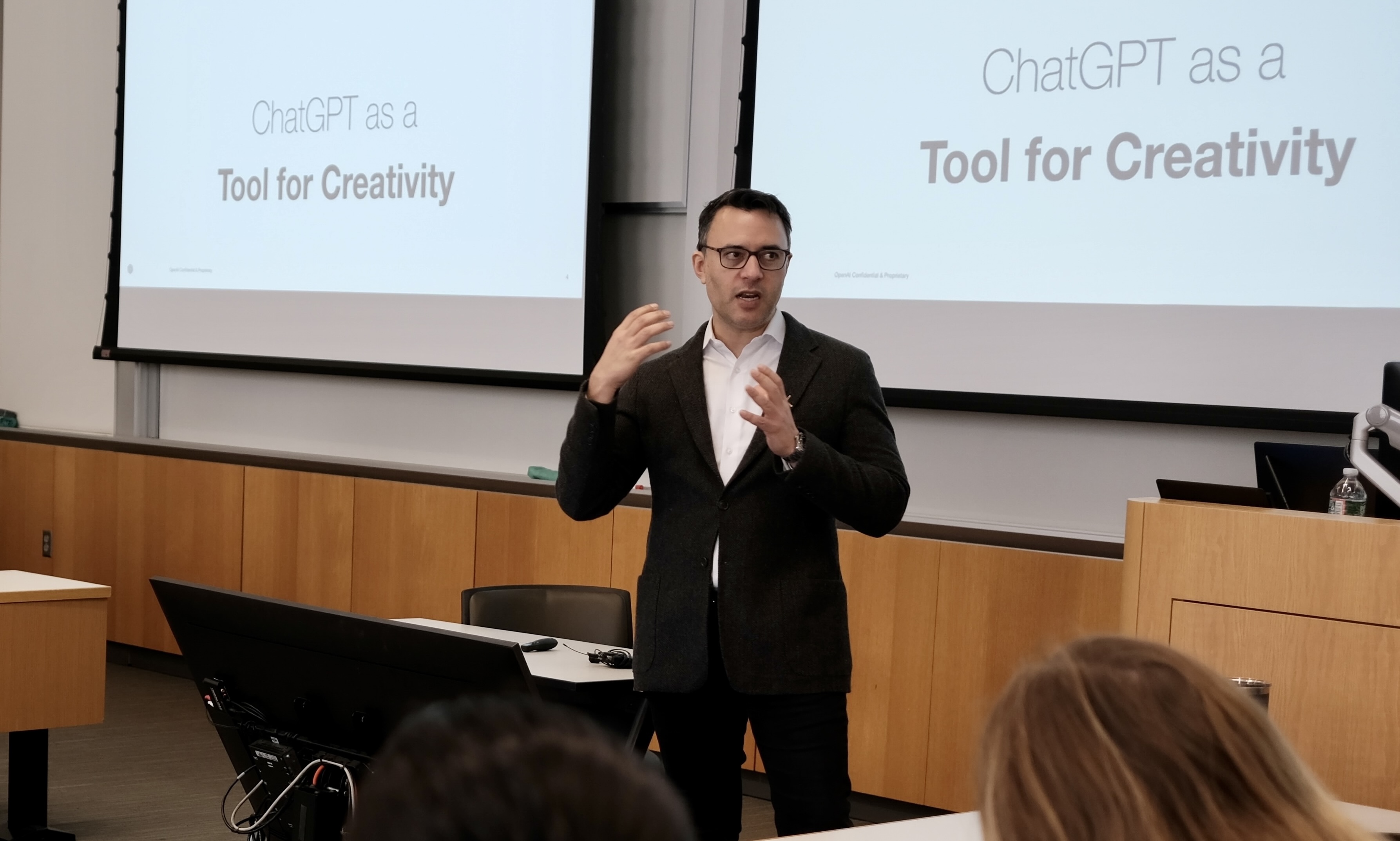
OpenAI alum and Yale writing professor Jay Dixit teaches organizations how to harness AI to amplify human creativity — without outsourcing the thinking.
The Movement
A Growing Community of Ethical AI Creators
When I started at OpenAI, the idea of a writer or creative person embracing AI felt radical — even traitorous. The community was small, and most people fell into two camps: those who rejected AI entirely, or those who used it to generate prose.
But I knew there had to be a third way. Through conversations with novelists, screenwriters, educators, and journalists at OpenAI, I discovered a growing group of brilliant, curious people who understood that AI doesn’t have to replace human creativity — that used thoughtfully, it can amplify it.
What started as a handful of early adopters has become a movement. Writers and educators across the country are discovering how to use AI without compromising their authenticity or outsourcing their creativity.
Voices from the Community
Sarah Rose Siskind
Stand-Up Comedian
“Writer’s block is gone.”
Ken Liu
Hugo Award Winner
“A sounding board for story ideas.”
Stew Fortier
Novelist
“Unlocking deeper creativity.”
Subscribe to the newsletter and be part of the community exploring the third way.
Core Principles
The Three Paradoxes of Socratic AI
#1
Honor Human Creativity
THE PRINCIPLE
Human creativity is sacred. Writing, storytelling, and art are acts of creation, and we must never outsource them to AI.
THE PARADOX
AI doesn’t have to be a threat to creativity. AI is a tool, and used thoughtfully, it can amplify creativity, push us to think better, and support us in doing our best work.
#2
Embrace the Struggle
THE PRINCIPLE
Creation is born of struggle. We must resist the urge to outsource the difficult parts to AI. Writing is hard — and that productive struggle is the whole point. The most powerful insights arise in those moments of discomfort and uncertainty when you’re staring down the blank page trying to figure out what comes next.
THE PARADOX
In those moments of doubt when you’re lost and stuck, AI can be a sounding board — a thinking partner to talk out your ideas, ask you clarifying questions, and help you find your way forward.
#3
Aim Higher
THE PRINCIPLE
The goal isn’t to work less — it’s to reach higher and achieve more. Work as hard as ever and, amplified by AI, produce more and better work.
THE PARADOX
Creative work demands focus. So do automate the grunt work. Let AI handle the formatting, the citations, the drudgery — so you can devote yourself to the acts of human imagination AI can’t replace.
These are not true paradoxes in the strict sense, since the statements don’t actually contradict each other. They’re maybe more like dialectics — matched truths, each in tension with its counterpart.
Beyond the False Dichotomy
Most People Fall Into One of Two Camps:
❌ Anti-AI
Avoid it entirely out of fear
❌ Pro-AI
Let it do the writing
✅ The Third Way
Use AI to think better, not to think for you
When I led OpenAI’s writing community, my job was to connect with writers, educators, and creators exploring ethical ways to use AI. What I discovered was a community of brilliant, curious people who understand there’s a third way.
They hold human creativity sacred — yet they see AI’s potential. They know what parts of the process they want to preserve and defend, but they’re curious to explore whether AI can inspire them to new heights. Most of all, they understand that AI doesn’t have to replace human creativity — that used thoughtfully, AI can be a powerful tool for reflection, feedback, and discovery.
“It was in conversations with those creators that I first defined the approach I call Socratic AI.”
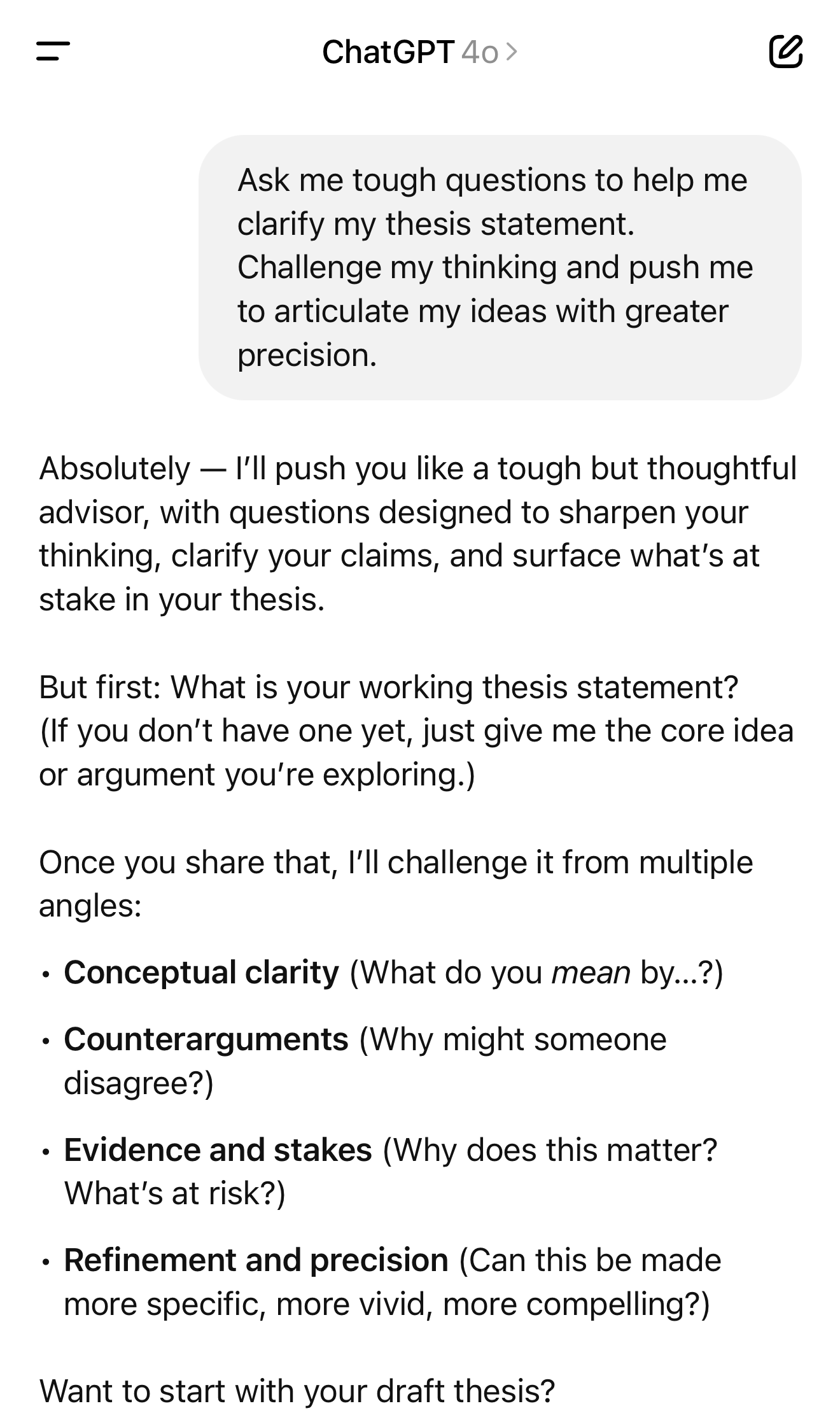
Asking AI to be creative:
“Write a story for me.” ❌
Using AI to help YOU be creative:
“Ask me questions to help me develop my story.” ✅
The reframe:
Don’t ask AI to be creative. Ask it to help you be more creative.
Building a Movement of Ethical AI Creators
Meet Jay Dixit
Jay Dixit is a writer, Yale professor, and creator of the “Socratic AI” framework. He spent 10,000+ hours honing his craft as a writer — and when AI arrived, he knew immediately how to use it: not to generate writing, but to help him think and write better.
"AI is my writer's room."
Writer First, AI Advocate Second
Award-winning journalist for The New York Times, Rolling Stone, and Psychology Today. Conducted George Carlin’s final interview and won The Moth storytelling competition. When ChatGPT launched, Jay immediately saw its potential — not to generate writing, but to support the creative process.
Building the OpenAI Writing Community
As Head of Community for Writers at OpenAI, Jay sought out and connected with writers, educators, and creators exploring ethical ways to use AI. It was in conversations with this community that he first defined the “Socratic AI” approach.
The Movement Grows
What started as a small community has grown into a movement. Jay has shared the Socratic AI framework at Harvard, Wharton, Columbia, Yale, and through OpenAI’s flagship education resources — demonstrating that AI can amplify human creativity rather than replace it.
Today: Building the Movement
Through speaking, consulting, and the Socratic AI newsletter, Jay helps writers, educators, and institutions discover how to use AI thoughtfully — preserving what makes us human while harnessing technology’s potential.
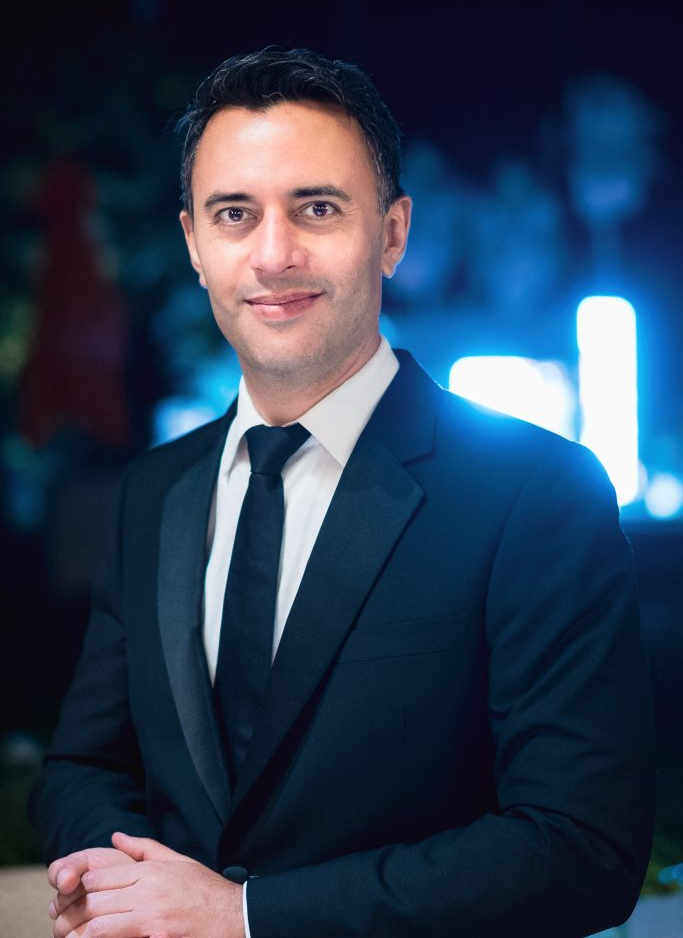
Using AI to enhance the creative process, not replace it.
The Writer's Room in Your Pocket
Use AI like a screenwriter’s room — pitch ideas, get feedback, hash out concepts before writing. Not to generate prose, but to help you figure out what to write before you write it.
Reverse Interviewing
Instead of asking AI for answers, have it ask you questions. Use AI as an interviewer to help you surface your best stories, clarify your thinking, and discover connections you might not otherwise reach.
Breaking Through Writer's Block
“I don’t have writer’s block anymore,” says comedian Sarah Rose Siskind. “Writer’s block is the feeling of being totally alone, and I don’t feel alone anymore because of this tool.”
For Writers & Creators
Novelists, screenwriters, journalists, comedians, and knowledge workers exploring how to use AI without compromising their authenticity or outsourcing their creativity.
For Educators & Institutions
Learn how to teach students and faculty to use AI as a thinking partner. Craft policies that support learning rather than just policing AI use.
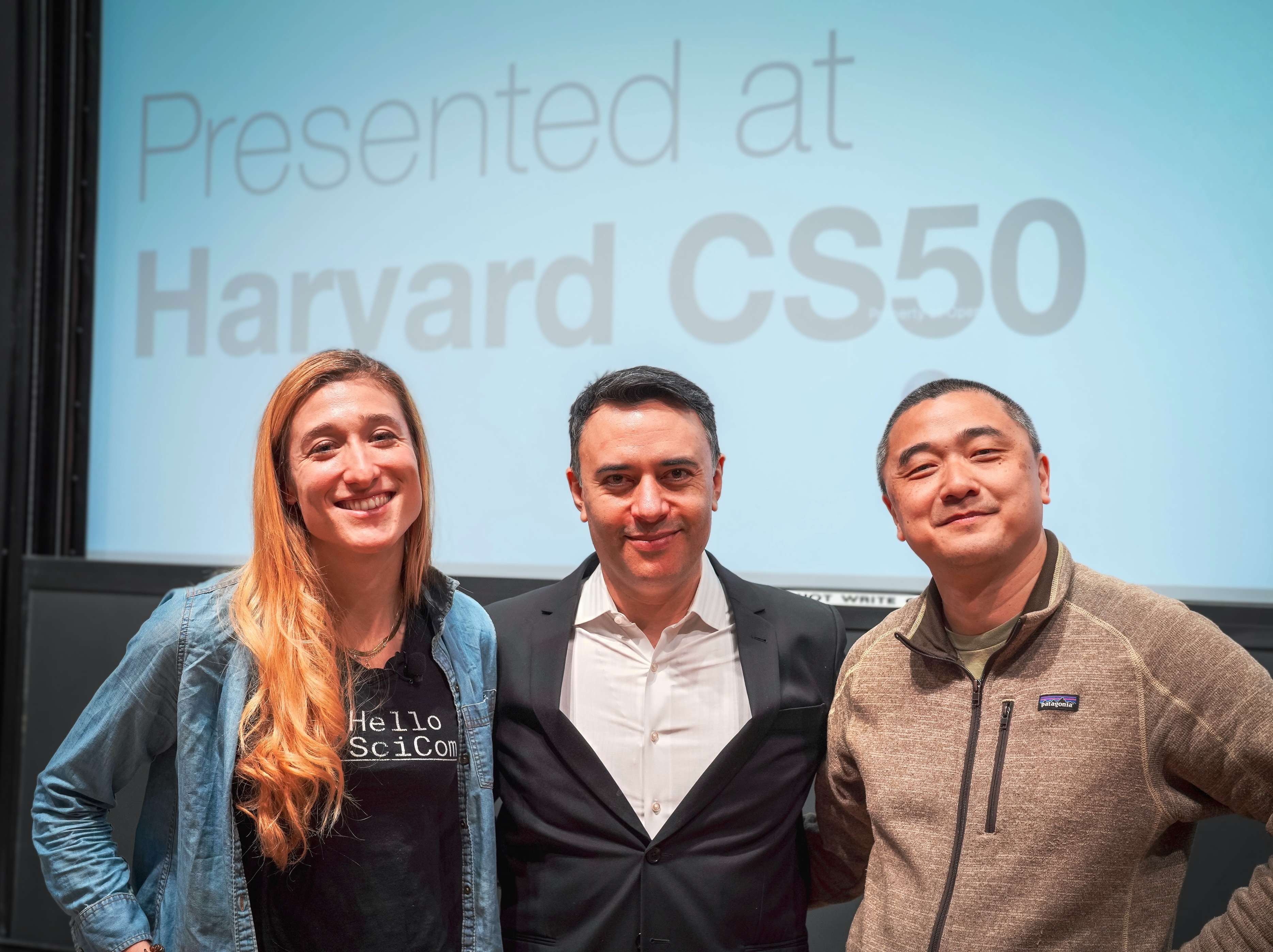
Real Stories
Writers and Educators Using Socratic AI
Sarah Rose Siskind
Stand-Up Comedian
“I don’t have writer’s block anymore. Writer’s block is the feeling of being totally alone, and I don’t feel alone anymore because of this tool.”
Sarah uses AI to brainstorm comedy material, but never to write jokes. She asks it to interview her about her life, helping her surface stories and perspectives she might have missed.
Ken Liu
Award-Winning Science Fiction Author
“I use ChatGPT as a sounding board to explore story possibilities before I write.”
Ken uses reverse interviewing to develop his sci-fi stories. He has AI ask him questions about his characters, world-building, and plot — helping him think through narrative challenges before writing a single word.
Dr. Amanda Chen
Writing Professor, Columbia University
“My students now use AI to challenge their thinking, not to avoid it.”
After attending Jay's workshop, Dr. Chen redesigned her assignments to incorporate Socratic AI. Students now submit Socratic dialogues showing how they used AI to develop their ideas — turning AI from a threat into a pedagogical tool.
Choose Your Path
Find Your Starting Point
Whether you're a knowledge worker, leading an academic institution, or building AI literacy in your organization, there's a path for you.
For Knowledge Workers
Use AI to surface your best ideas, break through blocks, and push your work further—without outsourcing your thinking.
- Case studies from novelists, screenwriters & comedians
- Reverse interviewing & brainstorming prompts
- Access to the creator community
For Organizations
Build AI literacy across your company. Empower teams to use AI thoughtfully and effectively while maintaining quality and authenticity.
- Corporate training & workshops
- AI adoption frameworks & best practices
- Leadership keynotes & team enablement
For Institutions
Transform how your university or school approaches AI in education. Turn AI from a cheating concern into a learning opportunity.
- Faculty development & teaching strategies
- AI-resilient curriculum & assessment design
- Academic policy & implementation guidance
Core Philosophy
The Socratic AI Approach
A human-centered methodology that reframes AI as a collaborative thinking partner — one that helps you surface your best ideas, articulate your thoughts with greater clarity, and make connections you might not otherwise have reached.
Academic Excellence
Trusted by elite institutions worldwide
Proven Impact
Measurable results that matter
Ethical Leadership
Human-centered by design
- Transparency first
- No shortcuts
- Human creativity
Free Resources
The Socratic AI Toolkit
Ready-to-use resources to get started with ethical AI immediately. Download now, implement today.
10 Prompts for Writers
Reverse interviewing templates, brainstorming frameworks, and creative prompts.
Get Free Access5 Assignment Templates
AI-resilient assignments that foster critical thinking and authentic learning.
Get Free AccessAI Disclosure Form
Help students document their AI use transparently and thoughtfully.
Get Free AccessGet instant access to all resources
Subscribe to the newsletter and receive the complete Socratic AI Toolkit immediately.
Claim Your Free ToolkitSignature Talks
Transformative sessions that help educators and institutions navigate the AI revolution with confidence and clarity.
Keynote reframing AI as a thinking amplifier — perfect for faculty summits, ed-tech conferences, and leadership retreats. Attendees leave with 3 prompts they can use immediately.
Hands-on workshop covering prompting strategies, disclosure forms, and the Socratic AI framework for responsible AI use. Faculty walk away with 5 assignment templates.
Turn memory checks into reasoning workouts and safeguard learning integrity with practical classroom strategies. Teachers know how to turn any essay prompt into a critical thinking challenge.
Real classroom strategies that turn AI into a springboard for critical thinking rather than a shortcut to answers.
Stories of writers and artists using AI to push imagination while keeping the creative process fundamentally human.
Practical frameworks for responsible AI use that aligns with transparency, fairness, and human values.
Custom strategies for organizations to harness AI thoughtfully — boosting productivity while fostering creativity.
Techniques like reverse interviewing and analogy generation to spark fresh ideas and innovative solutions.
Half-day introduction that demystifies AI and builds confident, skilled users across your organization.
I also design custom sessions tailored to your institution's specific needs and challenges.
From OpenAI to You
How This Framework Went Mainstream
From a handful of conversations to a product feature used by millions of students every day.
ChatGPT Launches
Jay immediately sees potential beyond content generation. Begins building community at OpenAI.
Discovering the Pattern
Through interviews with novelists, screenwriters, and educators, Jay identifies the "Socratic approach": flip the script and let AI ask the questions.
Codifying the Method
Jay refines the framework through workshops at Harvard, Wharton, and Columbia. The core insight: AI should amplify thinking, not replace it.
Publishing the Guide
Jay publishes OpenAI's flagship Student Writing Guide, cementing "productive struggle" and Socratic questioning as core principles.
The Framework Becomes a Feature
OpenAI launches ChatGPT Study Mode, built on Jay's Socratic questioning approach. Millions of students now benefit from the framework.
The Movement Grows
Through speaking, consulting, and the Socratic AI newsletter, Jay helps writers, educators, and institutions discover the third way.
Want to bring this approach to your institution?
Let's design a custom program for your faculty and students.
Schedule a ConsultationHow My Socratic Questioning Approach Inspired ChatGPT’s New Study Mode
Spring 2024: Interviews with Writers and Educators
Inspired by my interviews with writing community members like Stew Fortier and Ken Liu, I begin exploring how to use AI to ask questions instead of just providing answers. The idea is simple: Flip the script and let AI ask the questions for a change.
Summer 2024: I Develop the Socratic Framework
I refine the “Socratic approach” through conversations with novelists, screenwriters, and writing professors. My radical idea: Rather than ban AI, we should teach students how to use AI to challenge and deepen their thinking.
Fall 2024: I Publish My Student Guide
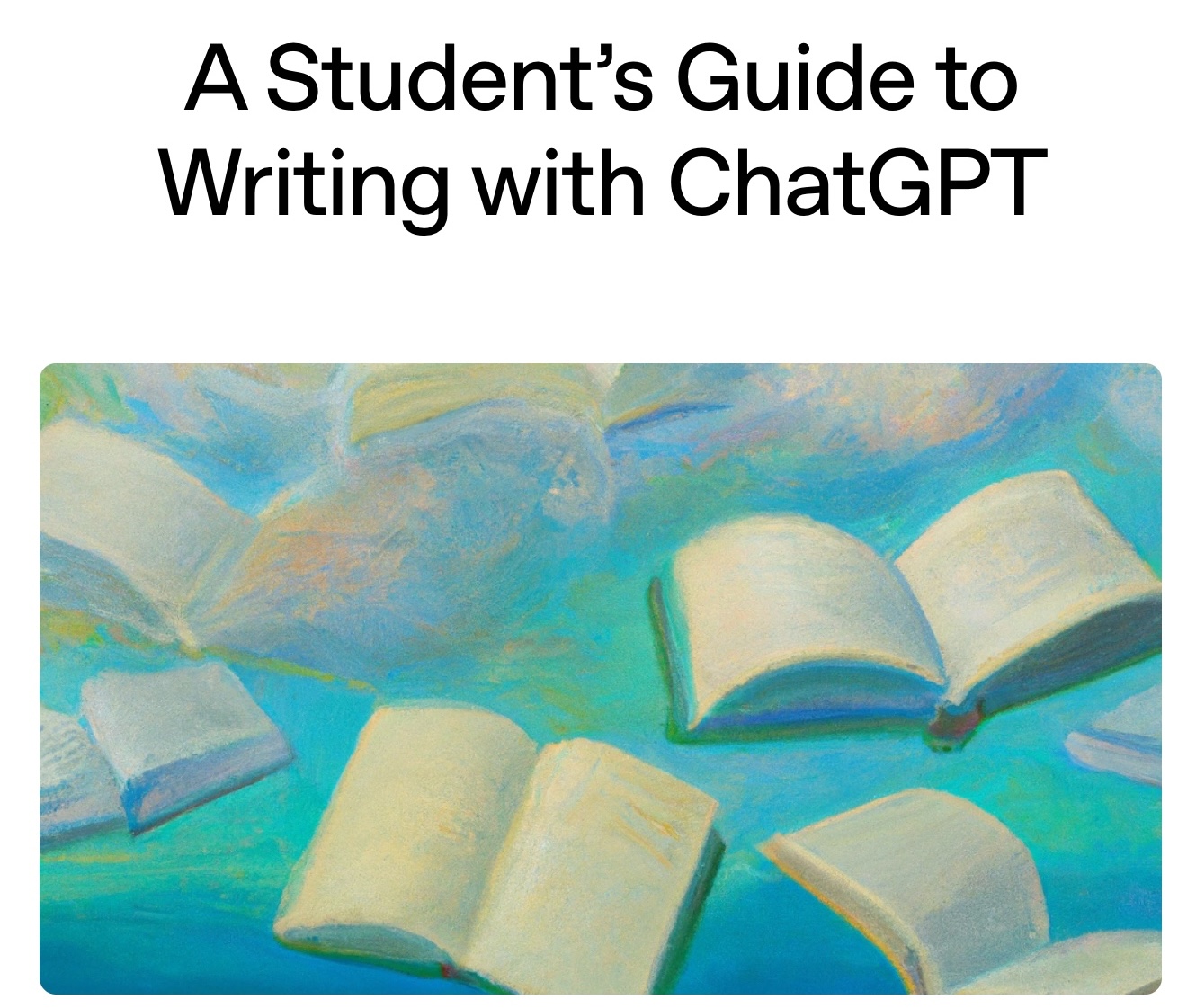
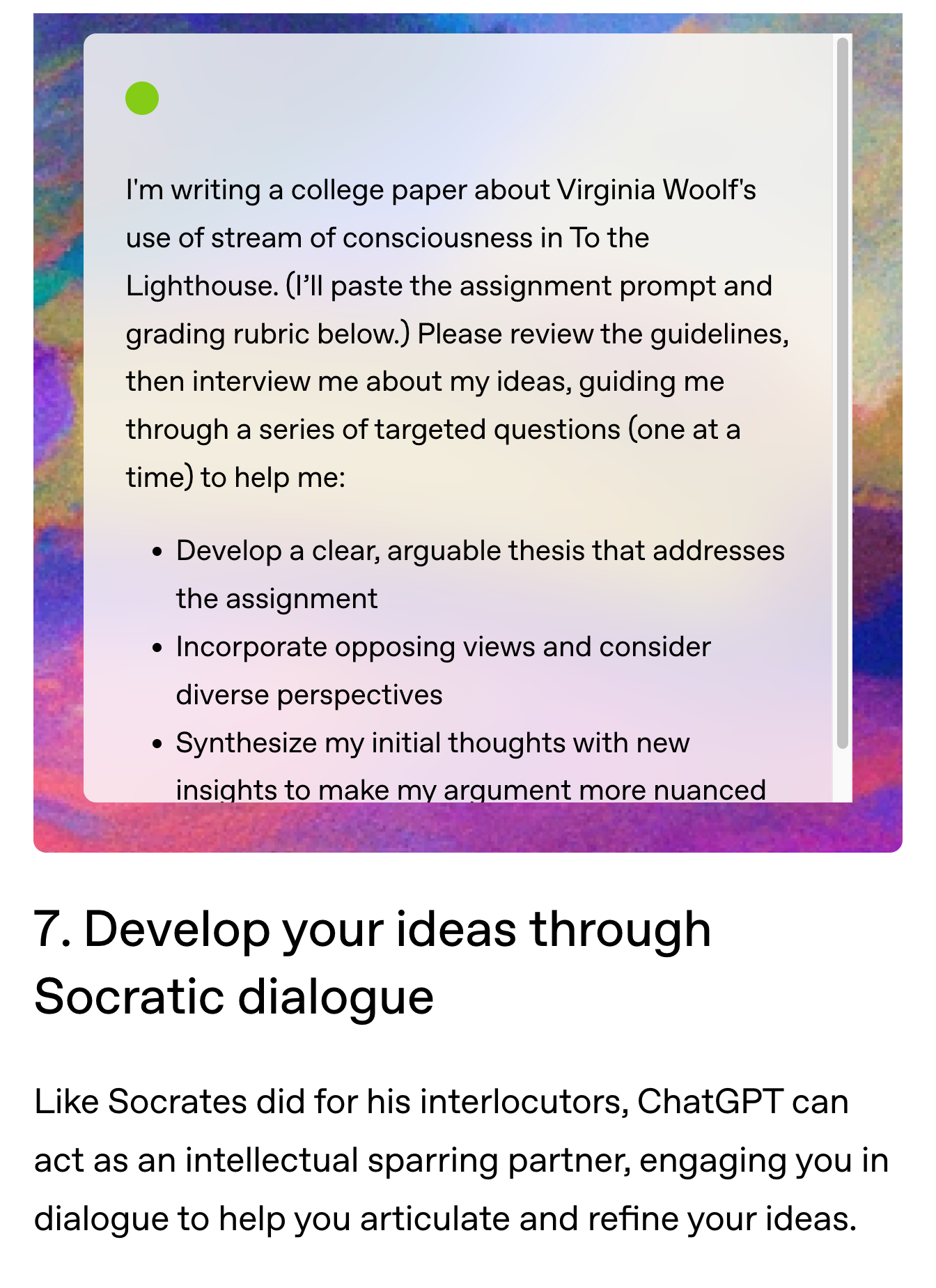
I document my approach in the Student Writing Guide I publish on OpenAI.com in fall 2024, providing examples and strategies for educators and students.
AI Should Amplify Thinking, Not Replace It
My philosophy — that “productive struggle” is important to learning and that students should “use AI as a tool, not an answer machine” — becomes central to OpenAI’s education messaging.
August 2025: Inspiring a New Product
My Socratic approach leads to the development of a new product: ChatGPT Study Mode. Designed to foster deeper understanding, Study Mode asks Socratic-style questions and offers step-by-step guidance instead of quick answers. (Just to be clear: A “tutoring mode” — “Hey ChatGPT, teach me about ionic bonds” — was already in the works. The Socratic questioning was my contribution.)
Study Mode Launched
With the launch of Study Mode, “Socratic-style questions” become a core feature of ChatGPT — bringing my educational approach directly into the product that tens of millions of students now use every day.
Recognition
Media & Recognition
Featured in leading publications and trusted by elite institutions worldwide.
Featured In
The New York Times
Staff Writer
Psychology Today
Senior Editor
Rolling Stone
Contributor
Business Insider
Featured Expert
Speaking & Workshops
Harvard
Yale
Columbia
Wharton
Princeton
Framework Adopted By
Universities
Faculty Trained
Students Impacted
“Fantastic. Absolutely the best presentation I’ve seen on how to actually use this stuff.”
Editor-at-Large, Reason Magazine
“I love the way you think about AI.”
CEO, The Signal
“Jay’s workshop completely changed how I think about AI in the classroom.”
Professor of English, NYU
“Finally, someone who gets it. AI as a thinking partner, not a shortcut.”
Screenwriter, Netflix
Ready to Transform Your
Institution?
Let's work together to harness AI's potential — all the while preserving human learning and creativity.
Schedule a consultation or subscribe to the newsletter today!