



My YouTube Lighting Setup — Godox ML100Bi + OctaDome 90
This is the lighting kit I’m thinking about for YouTube videos and portrait photography.
⭐ Overview (Summary written by ChatGPT)
This setup balances cinematic quality, simplicity, and small-apartment practicality.
I want a setup that:
- makes me look good on camera,
- doesn’t dominate my tiny apartment,
- can double as a photography lighting setup
Seems like the Godox ML100Bi + Amaran OctaDome 90 does that:
1. It delivers soft, flattering light in a compact footprint.
A large 3’ octabox gives beautiful “window light” — smooth transitions, gentle shadows, and flattering skin. Panels and small softboxes can look good, but this looks expensive. It gives talking-head videos and portraits a clean, cinematic quality.
2. The ML100Bi has enough power for what I shoot.
I shoot portraits at 50mm or 85mm, around f/2.8-f/4, indoors, with controlled ambient. The ML100Bi is bright enough for clean exposures without pushing ISO too high. I don’t need to overpower the sun or create beauty-dish-hard punch. I need beautiful, soft, controlled light — and this delivers.
3. It can double as a photography key light.
The OctaDome + ML100Bi isn’t just a YouTube tool — it’s also a portrait kit that produces editorial-quality light. It can be my signature look for portraits, headshots, and experimental shoots.
4. It’s modular and upgradeable.
By using a Bowens-mount modifier:
- I can switch to a strobe for a photo shoot
- I can add grids, reflectors, and specialty softboxes
- I’m building a system, not a dead-end
The ML100Bi seems like an affordable entry point into this ecosystem. Later on, I can always upgrade to an Aputure brick light.
5. It’s manageable in a small apartment.
A 3’ octabox is big, but:
- It can live on a single stand tucked into a corner
- It pops open quickly
- It packs down light enough to move easily
- It doesn’t require a C-stand footprint
It’s the largest source that can probably fit in my living room — and size is what gives softness.
6. I’ll probably get a plate-base light stand instead of a tripod-style stand
7. Fairly easy
Not too fiddly or bulky, and doesn’t take long to assemble
This rig hits the sweet spot of quality and simplicity.
The Kit
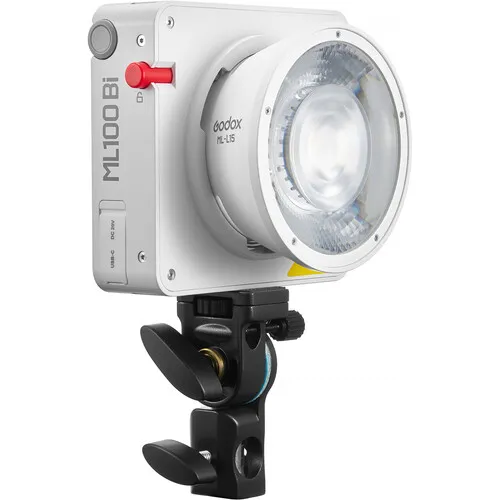
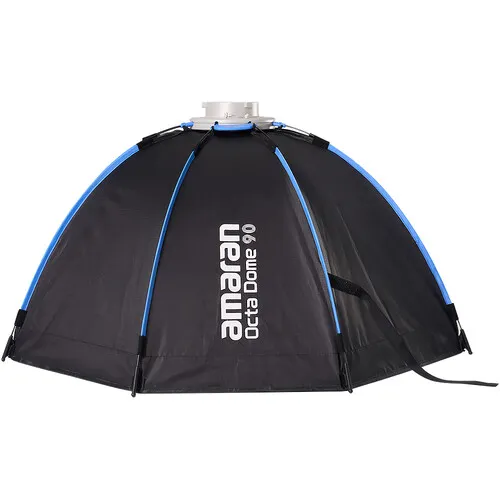
Main Light: Godox ML100Bi + Amaran OctaDome 90 (3’)
Godox ML100Bi + Amaran OctaDome 90 (3’)
What it really is:
A baby cinema key light. This is the “my face looks like a Netflix interview” setup.
- Godox ML100Bi🔗 is a compact ~100W bi-color COB LED with excellent color accuracy (CRI/TLCI ~97+), strong output, and enough punch to drive a 3’ OctaDome. It provides more headroom and brightness than the ML80, making it better suited for cinematic YouTube lighting and portrait photography.
- Amaran OctaDome 90🔗 is a 3’ / 90 cm octagonal softbox with inner baffle + outer diffusion + included grid, designed for Bowens fixtures up to 600W.
Together, they give you:
- Largest source by far → softest, most flattering light
- Round, natural catchlights in the eyes
- Enough power to shoot cleanly at moderate ISO when placed close (≈3-4 ft)
- Grid gives spill control so you’re not nuking your background
Pros:
- More output than the ML80 and brighter through large modifiers like the 3’ OctaDome
- Future-proof: doubles as a portrait/photography key, interview kit, etc.
- Works beautifully with your existing Sony photo brain
Cons:
- Physical footprint: 3’ dome + stand = “this is a light”, not invisible
- Needs more depth from the wall (ideally 2-4 feet in front of you)
- Slightly more setup/tear-down friction than panels
When this is the right choice:
- You can leave it set up in a corner or filming zone
- You care about looking absurdly good on camera
- You want one “hero” light that also works for portraits and stills
If you can tolerate the size, this is the best looking option.
Recommended Godox ML100Bi Configuration
For my use case — a continuous key light used primarily inside the 3’ Amaran OctaDome as the main YouTube/portrait key — I should get the $159 base kit🔗:
- Godox ML100Bi (continuous bi-color LED)
- 15° lens reflector (included, but not used with the OctaDome)
- AC power cable
This configuration gives me the light I want without paying for accessories I won’t use. Because my ML100Bi will live in a Bowens modifier (the OctaDome 90), lens reflectors, power bank holders, and handheld grips are unnecessary.
Recommended Accessories for the ML100Bi + OctaDome 90 Setup
To keep this setup simple, stable, and apartment‑friendly, here are the exact supporting accessories I should buy:
Bowens Adapter (Required)
The ML100Bi uses the native Godox LED mount, so to attach the Amaran OctaDome 90 (a Bowens‑mount modifier), I need:
- Godox ML‑GB Bowens Adapter
Converts the ML100Bi’s native mount into a standard Bowens S‑type mount.
Secure, compact, and designed specifically for ML‑series lights.
This is what lets the ML100Bi properly mount the OctaDome. Once attached, the softbox behaves exactly like it would on a Bowens‑mount strobe.
Light Stand (Compact + Stable)
Given my tiny Brooklyn apartment, I should choose a stand that is stable but has a minimal footprint:
- 9–10 ft aluminum light stand🔗 (air‑cushioned recommended) Lightweight, collapses small, stable enough for a 3’ softbox, and easy to tuck into a corner.
Optional: Short Boom Arm
A small boom arm lets me position the OctaDome slightly forward without moving the stand’s base, which is ideal for tight spaces:
- 25–40” grip‑arm boom
Works with most aluminum stands, provides clean overhead/forward placement, and does not add much footprint.
Counterweight / Safety
When using any boom or forward‑tilted setup:
- 1–2 sandbags (10–15 lb each)
Keeps the stand from tipping and adds peace of mind in a small apartment.
Summary
To complete the ML100Bi + OctaDome 90 setup, I should buy:
- Godox ML‑GB Bowens Adapter
- 9–10 ft aluminum light stand
- (Optional) 25–40” grip‑arm boom
- (Optional but wise) Sandbags for stability
These items keep the rig simple, stable, and easy to live with while maximizing the quality of the light.
Great move getting the OctaDome — that modifier will sing with any decent light source.
Now let’s answer your question cleanly:
⭐ For photography, is the Godox ML100Bi enough, or do you need a strobe?
Short answer:
You can absolutely use the ML100Bi for photography and get beautiful results — especially with the 3’ OctaDome.
BUT: A strobe will give you power, flexibility, and freezing ability that continuous light can’t match.
Here’s the honest, nuanced breakdown:
✅ THE ML100Bi + OctaDome 90 IS 100% USABLE FOR PORTRAIT PHOTOGRAPHY
This combo is basically:
- a nice quality continuous LED source
- clean color (CRI/TLCI ~97)
- enough output for portraits, headshots, editorial/close work
- soft, wraparound light with the 3’ dome
- great for shooting wide-open primes (f/1.2, f/1.4, f/2)
And for many types of portrait photography, it is totally enough.
In fact, you will likely love it because:
- What you see is what you get
- You can shape the light live
- No pre-flash, no recycle time, no sync cables
- Amazing for beginners and advanced shooters doing intimate portraits
With a fast lens like your Sony 50mm f/1.2 GM or 85mm f/1.8?
➡️ It’s a dream.
❗ BUT — LED continuous light does have three real limitations
1️⃣ Power
The ML100Bi is about 100W. A strobe is 100-600W seconds — which translates to orders of magnitude more peak light in a flash burst.
This matters if you want:
- to shoot at f/8 or f/11
- to overpower sunlight
- dramatic contrasty studio looks
- crisp, deep-DOF portraits
ML100Bi + OctaDome works best at:
- f/2.8-f/4
- ISO 100-800
- Indoors or shaded setups
2️⃣ Motion freeze
Continuous lights cannot freeze action.
If you want razor crisp images of:
- hair flips
- dancers
- movement
- kids
- fabric in mid-air
Then you need a strobe (speedlights or monolights). Flash duration on a Godox AD light can freeze micro-motions better than 1/2000 shutter.
3️⃣ Controlling ambient
Strobes let you make the room go dark by raising shutter speed (up to high-speed sync) while lighting only the subject.
Continuous lights don’t overpower ambient nearly as well.
⭐ WHAT RESULTS YOU GET WITH ML100Bi (REALISTICALLY)
With a 3’ OctaDome and ML100Bi, you get:
- Beautiful soft light
- Gorgeous wraparound look
- Cinematic tones
- The “window light portrait” vibe
- Perfect for couples, editorial, actors, musicians, portraits, interviews
It is especially amazing for:
- Portraits at f/1.2-f/2
- Moody / soft light photography
- Your red carpet portrait vibe (soft, flattering, natural)
Honestly, continuous lighting suits your aesthetic.
And working with a big soft source is incredibly intuitive.
⭐ WHEN YOU SHOULD ADD A STROBE
You should consider adding a strobe if you want to do:
✔ Studio-style crisp portraits at f/8 or f/11
✔ Anything involving motion
✔ Bright “beauty dish” style looks
✔ High-key white background portraits
✔ Outdoor portraits in sun but with dramatic lighting
✔ Editorial / commercial work that demands ultra sharpness at low ISO
🎯 My recommendation FOR YOU PERSONALLY
You already love:
- cinematic softness
- atmospheric lighting
- portraits that feel emotional, human, flattering
- minimal technical friction
Continuous light + big OctaDome is PERFECT for your style.
✔ For 85% of the photography you’ll do → ML100Bi + OctaDome is enough.
✔ For “studio-commercial-crisp-freeze-action” looks → add a strobe later.
You don’t need to buy a strobe immediately.
Shoot with the ML100Bi + OctaDome first. If you ever run into its limits, you’ll know exactly why and exactly what you need next.
If you want, I can show you:
- Example portraits using 24” vs 90 cm softboxes
- The ML100Bi exposure ranges you can expect at various distances
- Whether you should get AD200, AD300, or AD400 Pro if you go strobe
- A lighting diagram for your apartment and your favorite lenses
Just tell me what direction you want to explore.
Great — this gives me exactly what I need to give you a precise, real-world answer about whether the Godox ML100Bi + OctaDome 90 will be enough for your style of photography.
You’re shooting:
- Shutter: 1/160
- Aperture: f/4
- Focal lengths: 50mm or 85mm
- Distance: probably 3-5 feet from subject
Let’s break down what this means for continuous light vs strobe.
⭐ 1. Can the Godox ML100Bi + 3’ OctaDome produce enough light at 1/160 f/4?
✔ YES — indoors, in a dim or controlled ambient environment.
❗ NO — if the room is bright, or you want low ISO, or you want dramatic control over ambient.
Here’s the simple version:
A ~100W class continuous COB through a 3-foot softbox gives you about:
- ISO 800-1600 at f/4
- Distance: 3-4 feet from your subject
- Good exposure
If you want ISO 400, you bring the light a little closer. If you want ISO 100-200 at f/4, continuous light is not enough — you’ll need a strobe.
The ML100Bi has enough power for portraiture at f/4, but not enough to overpower ambient light or produce low-ISO, commercial-crisp images.
⭐ 2. Why continuous light struggles at f/4
A double-diffused softbox typically costs ~1.5-2.5 stops, more with a grid.
Example:
- The ML100Bi is 100W → equivalent to maybe a 300-500W tungsten practical
- A strobe like AD200/AD300/AD400 emits orders of magnitude more light in the flash burst
So continuous light often forces:
- higher ISO
- closer working distances
- softer, moodier looks (not crisp, punchy studio looks)
But continuous light gives beautiful cinematic mood, which fits your overall taste.
⭐ 3. For YOUR shooting style — what does this mean?
You said:
I shoot at 1/160 f/4 on a 50mm or 85mm.
This tells me:
✔ You like a bit of depth of field
(not wide open at f/1.2 or f/1.4)
✔ You probably shoot portraits where the face is fully in focus
Not ultra-shallow bokeh aesthetic.
✔ You shoot at normal shutter speed (1/160)
Which is perfectly fine for continuous light.
So the real limiting factor becomes:
➡️ Can your ISO tolerate going up to 800-1600?
Your Sony camera handles that beautifully. Noise is not a real limitation for you.
So the ML100Bi + OctaDome will give you very good results — as long as:
- you’re indoors
- you’re not in a bright room competing with ambient
- you can bring the light 3 feet from your subject
This is how most portrait photographers use continuous light.
⭐ 4. When would a strobe be much better for your settings?
A strobe becomes dramatically better when you want:
✔ ISO 100 or 200
✔ Total control over ambient light
(dark background, light only where you put it)
✔ Crisp commercial-style image quality
Sharper microcontrast because the ISO is low, aperture is tighter, light is cleaner.
✔ Ability to shoot at f/8 or f/11
(Led lights absolutely cannot do this unless they’re within 12 inches of the subject.)
✔ Freezing motion
A strobe’s flash duration acts like a super-fast shutter.
⭐ 5. Real-world scenarios for you
Scenario A — Shooting moody portraits in your apartment
ML100Bi + OctaDome: Perfect Strobe: Not necessary
Scenario B — Actor headshots at f/4, indoors
ML100Bi + OctaDome: Very good Strobe: Slightly better for crispness and ambient control
Scenario C — High-key bright portraits
ML100Bi: Weak Strobe: Vastly better
Scenario D — Shooting in a room with lots of window light
ML100Bi: Will lose the fight Strobe: Will overpower ambient easily
⭐ 6. My personal recommendation for YOU:
✔ Start with the Godox ML100Bi + 3’ OctaDome as your key light.
Given your taste in light — cinematic softness, atmospheric, flattering — this combo will make beautiful portraits.
✔ You do NOT need a strobe yet.
Because your shooting settings (1/160, f/4) and camera ISO tolerance mean continuous light is totally workable.
✔ Add a strobe later only if:
- You want studio-bright looks
- You want ISO 100
- You want f/8, f/11, f/16
- You want to overpower daylight
- You develop a taste for punchy, crisp, high-contrast beauty lighting
If that day comes, I would recommend:
- AD200 Pro (best all-around first strobe)
- AD300 Pro (best compact Bowens mount option)
- AD400 Pro (best full-power all-purpose strobe)
But for now?
With your style?
⭐ ML100Bi + OctaDome 90 will give you killer results at f/4.
If you want, I can also tell you - how to add a reflector or kicker with continuous light for a “magazine” look:
Reflectors
Here’s the clean, cinematic, industry-standard way to add a reflector or kicker to your continuous-light setup so your portraits look like they belong in a magazine. This works perfectly with your ML100Bi + OctaDome 90 (or any big soft key).
I’ll give you:
- The exact placement
- Why it works
- Variations for dramatic vs clean commercial looks
- Reflector choices and angles
- What NOT to do
Let’s make you look like Annie Leibovitz meets Vanity Fair.
⭐ 1. The Classic “Magazine” Key-Reflector Setup
This is the most flattering multi-light look you can create with continuous lighting.
Primary light:
ML100Bi + OctaDome 90, placed:
- 30-40° above eye level
- 30-45° to the subject’s front-left or front-right (loop lighting position)
- 3-4 feet from the subject
This gives you the soft, dimensional, expensive key that makes your images feel cinematic.
Now add the reflector:
👉 Put a white, silver, or soft-gold reflector on the opposite side of the face
Distance: 1.5-2.5 feet from the subject Height: same height as the face
Angle it so it catches the spill from the OctaDome and bounces it back into the “shadow side” of the face.
Result: Creamy, controlled fill. Shadow detail without killing dimensionality. Skin glow. Eyes pop.
This is the single most useful addition you can make.
⭐ 2. Add a Kicker (Backlight) for Magazine Polish
This is how you go from “nice portrait” → editorial.
Placement:
- Put a second light (or cheap LED panel) behind the subject, angled toward the cheek/shoulder opposite the key
- Raise it slightly above head height
- Aim for the cheekbone, jawline, and rim of hair
Brightness: Kicker should be 20-50% of key light intensity.
Result:
- Hair separation
- Sculpted jawline
- Highlighted cheek edges
- Subject pops from background
- 3D “magazine” dimensionality
This is exactly what you see in GQ, Vanity Fair, Rolling Stone, Esquire portraits.
⭐ 3. The Three Most Reliable Reflector Angles
Think of the reflector as a second, free light source.
(1) Clamshell Fill (beauty look)
- Reflector directly under the face, angled upward
- Great for glamour, soft beauty, press shots
- Minimizes shadows under the eyes
- Adds a glowing “ring light without the ring light” feeling
(2) Side Fill (editorial look)
- Reflector beside the subject, opposite the OctaDome
- Maintains sculpting while softening shadow intensity
- Creates classic high-end magazine lighting
(3) Accent Bounce (fashion look)
- Reflector slightly behind and to the opposite side of the key
- Used not to fill shadows but to bounce subtle rim light along the cheek/jaw
- Great with silver/gold mix reflectors
- Makes skin look rich and dimensional
⭐ 4. Which Reflector Color to Use?
White: Clean, soft, natural, never overshoots Silver: Stronger fill, more contrast, more pop (great for men’s portraits) Gold: Very warm; use sparingly Soft gold / Zebra: Perfect skin tone warmth without looking orange Black (negative fill): Removes light to increase contrast; used in fashion and moody portraits
For your aesthetic? White or soft gold is perfect, unless doing very dramatic shots, then silver/black.
⭐ 5. Quick Setup Recipes You Can Use Immediately
🔥 A) Clean Editorial Portrait (GQ / Vanity Fair)
- Key: OctaDome 90 at 45°
- Reflector: White, very close, opposite key
- Kicker: Small LED behind subject on key side
- Background: Slight gradient or simple color
Result: Dimensional, flattering, crisp.
💄 B) Beauty / Actor Headshot
- Key: OctaDome, slightly high
- Reflector: White underneath (clamshell)
- Optional hair light: very soft
Result: Gorgeous skin, no shadows, glow.
🎬 C) Cinematic Portrait
- Key: OctaDome low and close (Rembrandt-ish)
- Negative fill: black panel on opposite side
- Kicker: Small bright rim light
Result: Drama. Depth. Portraits with story.
⭐ 6. What NOT to Do
- Don’t put the reflector too far → it won’t do anything.
- Don’t put the kicker too bright → it should kiss the face, not steal the show.
- Don’t bounce silver too close → you’ll get raccoon catchlights.
- Don’t put the reflector directly across from the light at 180° → flattens the face too much.
⭐ 7. Your Best Setup (Knowing Your Taste & Aesthetic)
Given:
- You love cinematic, soft, flattering portraits
- You shoot with Sony + fast lenses
- You react strongly to images with atmosphere and depth
Your “signature” setup will be:
Key: OctaDome 90 at 30-40°
Reflector: White on the shadow side, 1.5-2 ft away
Kicker: Small LED behind, at 30° off-axis, 30% brightness
This will give you: Cinematic softness + clean polish + magazine dimensionality.
Diagrams
Here are clean, simple, creator-friendly lighting diagrams for your exact setup:
- Godox ML100Bi + Amaran OctaDome 90 as your KEY
- Reflector as FILL
- Small LED panel as a KICKER
- Subject at 50mm or 85mm distance
- Designed for a Brooklyn apartment (small, rectangular room)
I’ll give you two diagrams:
- Classic Editorial Magazine Look (GQ / Vanity Fair)
- Beauty / Clamshell Variant (Hollywood headshot)
⭐ Diagram 1 — Editorial Magazine Portrait (Your best look)
This is the setup I recommend as your signature style. It’s dimensional, soft, cinematic, and very flattering.
                 [Kicker Light]
                      \
                       \ (20–30% power)
                        \
                        (placed behind subject
                         aimed at cheek/jaw)
                              |
                              |
                -------------------------
                |                       |
                |       SUBJECT         |
                |                       |
                -------------------------
                         /   \
                        /     \
                 (white or     \
                 soft-gold       \
                 reflector)       \
                                   \
                             (fills the shadow side)

                    KEY LIGHT (OctaDome 90)
                    30–45° to subject’s face
                    Slightly above eye level
                    3–4 ft from subject
            [ ML100Bi in Amaran 90cm OctaDome ]
Positioning Notes:
- Key distance: 3-4 feet
- Key height: just above eye level
- Key angle: 30-45° horizontally, tilted slightly down
- Reflector distance: 1.5-2 ft from the subject’s shadow side
- Kicker height: above subject’s head, angled down to cheek/shoulder
- Kicker brightness: ~20-35% of the key
This creates:
- Soft, sculpted key
- Clean fill with control
- Beautiful catchlights
- Subtle cheek/jaw highlight → true magazine polish
This is the “zero shadows, glowing skin” configuration.
                     KEY LIGHT
                 (OctaDome 90, ML100Bi)
                    Slightly above
                    and angled down
                         |
                         |
                -------------------------
                |                       |
                |       SUBJECT         |
                |                       |
                -------------------------

                         /\
                        /  \
                       /    \
                 (Reflector)
              Positioned UNDER chin
             angled upward 30–45°

         [Optional kicker for rim light]
                        \
                         \
                          \
Positioning Notes:
- Key height: high, but still catching the eyes
- Reflector: directly below chin, angled upward
- Effect: glowing, polished, no harsh shadows
- Kicker: optional — adds subtle separation
This is amazing for:
- Headshots
- Beauty portraits
- Soft editorial
- YouTube thumbnails where the face needs to pop
⭐ SPECIAL DIAGRAM — Cinematic Portrait (Moody, dramatic)
If you want a more editorial / Vanity Fair / Rolling Stone mood:
                     (Negative Fill)
                    [Black Foamcore]
                           |
                           |
KEY LIGHT (OctaDome)  ----> SUBJECT <----- Kicker Light
30–40° on key side           |              (brighter here,
close to subject             |               ~30–50% power)
                             |
                 (no reflector on shadow side)
Use this when you want:
- More drama
- Deeper shadow falloff
- More sculpted cheekbones
- A darker, moodier frame
- High-end “celebrity portrait” energy
You would use black foamcore instead of a reflector — it absorbs light instead of bouncing it.
For your actual aesthetic (cinematic, flattering, professional):
→ Diagram 1: Editorial Magazine Portrait
This will quickly become your signature lighting.
And with your ML100Bi + 3’ OctaDome at 1/160, f/4, your Sony sensor will give you beautiful results.
⭐ Test Shots to Try
Once you have your ML100Bi + OctaDome setup, run through these fundamental lighting variations to build your personal library of looks:
- Straight key (OctaDome only)
- Key + reflector fill
- Key + kicker
- Key + negative fill
- Key high vs low angle
This gives you a library of looks — extremely useful for decision-making and reference.
Gemini
The “Black Background” Physics Problem
You mentioned wanting a black background in a small room. This is the hardest thing to do with a 100W light.
- The Physics: To get a black background, your subject must be much brighter than the background.
- The Challenge: In a small room, light from your softbox bounces off the walls and fills the shadows, turning your “black” background into “muddy grey.”
- The Solution: You need a Grid (Honeycomb) for your softbox. This directs the light forward and stops it from hitting the walls.
- Why Power Matters: With a grid, you lose light output. To kill the ambient light, you want to shoot at a lower ISO (e.g., ISO 100, f/4 or f/5.6).
- 100W Light: You might be stuck at ISO 400-800 to get proper exposure through a grid + diffusion, which might let some room ambient light bleed in.
- 200W Light: Gives you that extra “stop” of light to more easily crush the ISO down to 100, helping the background go pitch black.
Final Recommendation Strategy
Scenario A: You value “Low Friction” above all else. Buy the Godox ML100Bi. It’s 85% of the performance for 20% of the hassle. It’s plenty bright for a talking head if you can control your window light.
- Strongly recommended: Buy a Grid (Honeycomb) for your 3’ Octabox for spill control in small rooms.
Scenario B: You demand “Color Perfection” and the “Black Void” look. Buy the Amaran 200x S. It has the raw power to punch through a double-diffused softbox with a grid and still let you shoot at ISO 100. The color science is better for skin tones.
- Note: The Amaran 100d S🔗 is daylight balanced only. Since you want “cinematic” and “skin quality,” having the Bi-Color (x) version is safer to match practical lamps or warm up your skin tone without messy gels.
My Suggestion: Start with the Godox ML100Bi. If you find the “black background” isn’t dark enough, simply move the light 6 inches closer to your face (Inverse Square Law) rather than buying a bigger light. The friction of a bulky 200W monolight in a Brooklyn apartment is a real creativity killer.
Using a grid (eggcrate) on a softbox is all about control without sacrificing softness. You keep the flattering quality of the light, but you get much more intentional shaping.
1. Directional control (the big one)
A grid narrows the beam spread of the softbox.
- Without a grid: light spills everywhere — onto walls, background, ceiling, camera lens.
- With a grid: light travels forward, not sideways.
Result: Your subject stays bright, the room stays darker, and the light feels aimed rather than ambient.
This is especially valuable in:
- Small apartments
- White-walled rooms
- Talking-head setups where spill kills contrast
2. More contrast, more shape
Because spill is reduced, the light falls off faster outside the main beam.
That gives you:
- Better face modeling (cheekbones, jawline)
- Slightly deeper shadows on the far side of the face
- A more “cinematic” look without going hard or harsh
This is how you get:
“Soft but not flat.”
3. Cleaner backgrounds (without adding more lights)
A grid helps you separate subject from background even with a single light.
- Background stays darker
- Subject pops more
- Less need for flags, cutters, or extra lights
For a one-light talking-head rig, this is huge.
4. Less lens flare and camera contamination
Because grids limit off-axis light:
- Less flare
- Less haze
- Better micro-contrast
This matters more than people realize for:
- Interviews
- YouTube talking-head shots
- Glasses wearers
5. Keeps softness intact
Important misconception:
A grid does not make light harder.
Softness is determined by:
- Apparent size of the source relative to the subject
- Distance from subject
A grid:
- Does not shrink the source
- Does not add specularity
So you keep:
- Smooth skin
- Gentle shadow transitions
- Forgiving highlights
6. Practical benefits in a small apartment
Given your Brooklyn-apartment constraints, a grid helps you:
- Avoid lighting the entire room
- Prevent white walls from acting like uncontrolled bounce
- Maintain repeatability (light looks the same every time)
This is especially relevant if you’re using:
- A 3’ octabox
- One hero COB light
- No flags or negative fill
Tradeoffs (honest downsides)
Grids aren’t free wins.
- You lose ~½-1 stop of light output
- Slightly narrower “sweet spot” for movement
- Adds one more piece to set up (minor friction)
In your case, these are almost all acceptable costs.
When a grid is most worth it
Grids shine when:
- You’re running one key light
- You want a cinematic interview look
- You’re fighting spill, flatness, or washed-out backgrounds
- You’re in a tight space
That’s basically your exact use case.
Bottom line
A grid turns a softbox from:
“Nice light filling the room”
into:
“Deliberate, shaped, cinematic key light”
Same softness, more intention.
For your goals
Yes — for /your goals, you should use a grid on the 3’ octabox./ As a default state for how you actually shoot, in a small Brooklyn apartment, with one hero light.
You are:
- In a small, white-walled apartment
- Running one key light
- Shooting talking-head video where subtle contrast = “cinematic”
- Prioritizing skin quality + mood over raw brightness
- Wanting something you’ll set once and trust
That combination strongly favors controlled softness, not “room-filling softness.”
A grid gives you exactly that.
What happens without a grid (in your space)
With a 3’ octabox, no grid, COB light:
- Light spills everywhere
- Walls and ceiling become accidental fill
- Contrast flattens
- Background lifts even if you don’t want it to
- The image looks “nice” but a little podcasty / YouTube-y
You can fix this with:
- Flags
- Negative fill
- Distance tricks
- Turning off lights
- Repositioning furniture
...but now we’ve violated your low-friction, I’ll-actually-use-this rule.
What a grid changes for you
With a grid on the octabox:
- Light goes where you aim it, not everywhere
- Background stays darker without effort
- Face stays soft but gains shape
- You get separation with one light
- White walls stop sabotaging you
This is how you get:
“Netflix interview” instead of “well-lit apartment video”
Same softness. More intention.
Does a grid make the light harsher?
No — and this is important.
Softness is about:
- Apparent size of the source
- Distance to subject
A grid:
- Does not shrink the source
- Does not create specularity
- Does not create harsh shadows
What it does is prevent sideways escape.
Think of it as privacy screens for photons.
The power question (ML100Bi vs 200W lights)
Here’s the key insight:
A grid slightly reduces output, but increases usable contrast.
In your use case:
- You’re not lighting a room
- You’re lighting a face
- You’re likely at ISO 400-800 for video anyway
So:
- ML100Bi + 3’ octa + grid = enough power
- 200W lights buy you more headroom, not better skin
If you later:
- Add a grid
- Add negative fill
- Darken the background
...the ML100Bi is still working in its sweet spot.
Small-room black backgrounds (important)
If you ever want:
- Darker backgrounds
- Black fabric
- Bookshelves fading to shadow
A grid helps enormously with continuous light because:
- Continuous sources don’t overpower ambient as easily as strobes
- Spill is the enemy of darkness
A grid lets you:
- Keep exposure where you want it
- Avoid cranking ISO or killing all ambient
This is one of the quiet superpowers of grids in small rooms.
Future-proofing
Your instincts here are very solid:
- Bowens mount ✔
- Shared modifiers ✔
- One hero softbox ✔
When you eventually add:
- A strobe
- A hair light
- A kicker
You’ll already be thinking in terms of controlled zones, not ambient mush.
The grid trains your eye into that mode early.
Friction check (will this annoy you?)
Let’s be honest:
- A grid adds 10 seconds to setup
- It folds flat
- It lives on the softbox most of the time
Compared to:
- Fighting spill
- Re-lighting every time
- Wondering why it doesn’t feel cinematic today
...it’s less friction overall.
My recommendation, plainly stated
For your setup:
- Yes, buy the grid
- Treat it as the default
- Remove it only if you want flatter, brighter, roomier light
If you want one decisive prescription:
ML100Bi + 3’ octabox + 40° grid Key light at ~45° off camera, slightly above eye line Background naturally falls into shadow Skin stays soft, image stays cinematic
That setup matches how you live, how you shoot, how you want the footage to feel
ChatGPT
Here’s a helpful summary of light stands with a circular/disc base (aka “plate base” or “round base”) that are great for photography/video setups where a tripod footprint feels too wide — perfect for a Bowens-mount key light in a small apartment.
These stands typically have a flat circular metal base instead of three legs, which makes them:
✅ Easier to place close to desks/walls ✅ Visually cleaner on camera ✅ More stable with big softboxes when properly weighted ✅ Less likely to trip over
I can recommend options across a few use-cases: professional studio, budget compact, and flexible booms.
📸 Best Choices for Bowens-Mount Softbox Setups
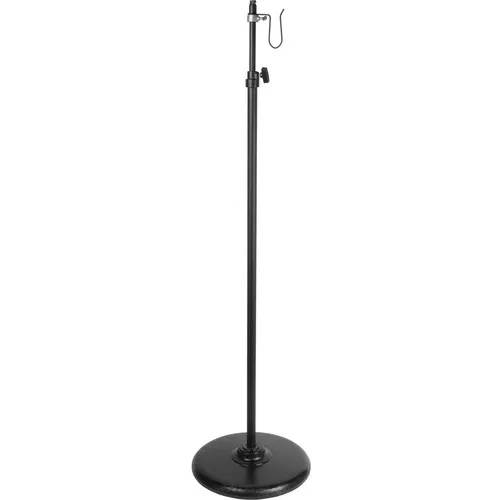
Altman Adjustable Light Stand with Round Base (5-9’)🔗 B&H Photo A professional-grade stand with a low-profile 18” diameter cast iron base. Telescopes from 5’ to 9’ and supports heavy fixtures. Excellent if you plan to leave your OctaDome + ML100Bi up long-term.
🧠 What to Look For
When pairing with your ML100Bi + 3′ OctaDome:
🔹 Load Capacity
Your softbox + continuous light isn’t super heavy, but a round base stand should support at least ~15-20 lb payload. That gives you headroom for grids, gels, and small booms.
🔹 Height Range
Look for stands that go up to 8-10 ft — this lets you position the octa above eye level without straining.
🔹 Disc Base Size
A larger diameter base (12-15″) feels much more stable than a small one. If your shooting angle often shifts, go bigger.
🔹 Sandbag Compatibility
Even with a round plate base, adding a sandbag or two against the stand column dramatically improves stability when you have a softbox forward of the stand.
📌 Quick Setup Tips for Small Apartments
✔ Place the stand behind and slightly to the side of your desk/couch — not directly in front ✔ Use sandbags on the stand column instead of legs — much cleaner footprint ✔ Add a small boom if you want the octa closer to camera without crowding your space ✔ Black boom grips look cleaner on camera than a three-leg tripod base
Which Stand Should You Pick?
- Best Professional / Permanent Setup: Altman Round Base (5-9’)🔗 or Kupo 340 Roller Stand Base🔗 — stable and elegant for a constant corner rig.
- Best for Rolling/Mobility: Kupo Runway Stand Base🔗 — braked casters let you roll the setup aside when not filming.
- Best Compact/Low: Kupo Backlite Base Stand🔗 — ideal for background/backlight use or tight spaces.
If you want, I can tailor this list further based on:
- Your exact ceiling height
- The distance you want the softbox from you
- Whether you want a boom arm included Just tell me!

Comments
Join the discussion on GitHub.