

My Socratic
Approach to AI

OpenAI alum Jay Dixit, who taught writing and storytelling at Yale, teaches students how to use AI in ways that make them think more, not less.

Students are already using AI, so I teach them a mindset and a set of techniques for using it more thoughtfully: never as a shortcut, always as a sounding board and thinking partner to talk out their ideas and elicit their own insights.

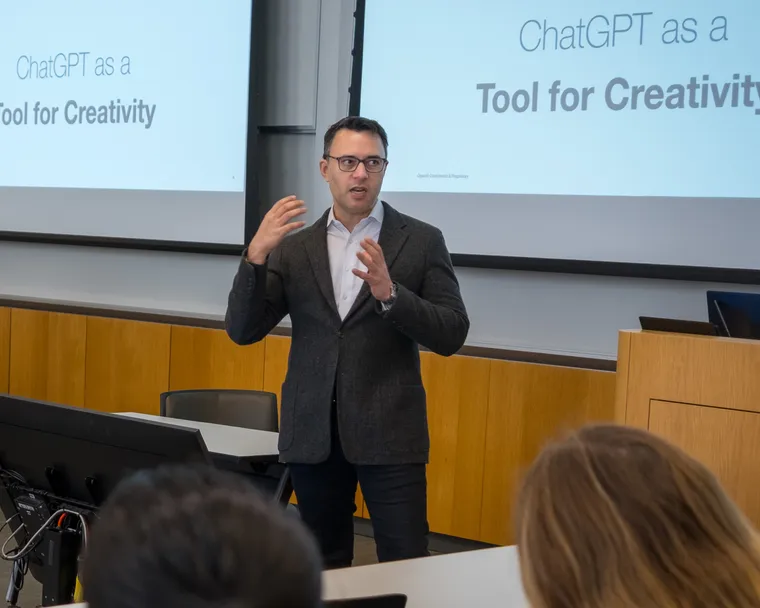
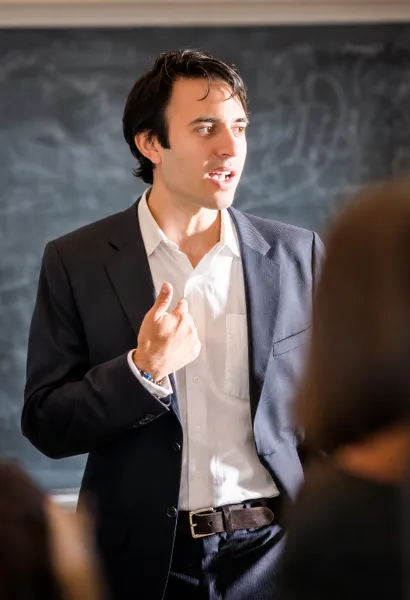
Jay Dixit speaking at Wharton
Jay Dixit (then at OpenAI) speaking at Wharton about ChatGPT as a tool for creativity. (Hint: Don’t ask AI to be creative — ask it to help you be more creative.)

What I teach students

In schools, the focus is often on policing, detecting, and preventing AI misuse. Few are teaching students how to use AI well — ethically, responsibly, not as a shortcut but in a way that makes them think more, not less.

AI not as a content generator, but as a Socratic thinking partner. A sounding board you can use to talk out your ideas and find your way forward.

What students learn:

  • Surface ideas, examples, and stories from their own experience
  • Express ideas with clarity and force — without AI writing for them
  • Iterate using feedback to strengthen their work
  • Finish projects with structure and accountability
  • Learn and master thinking and writing skills over time

Most people use AI to do the work for them. I teach people how to use AI to elevate the work only humans can do.

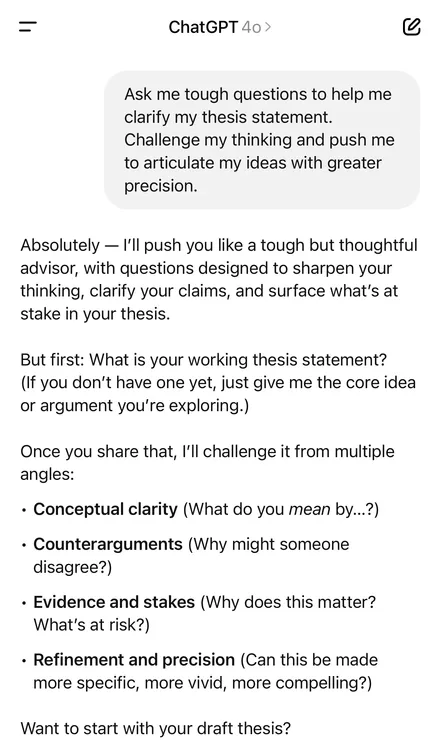
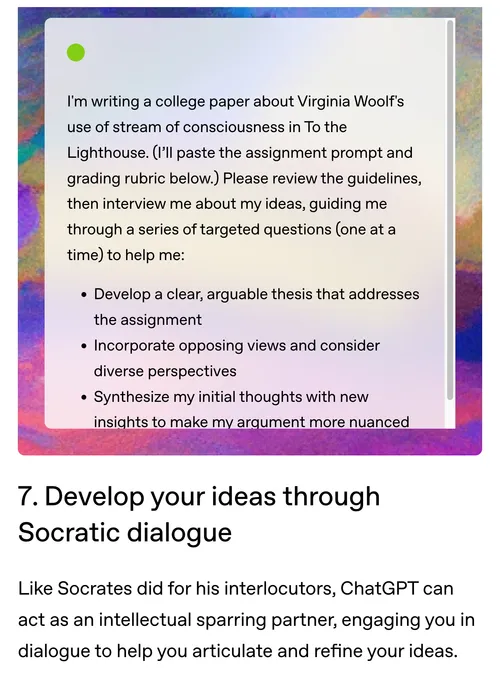
ChatGPT conversation showing the Socratic approach to AI

Outsourcing the writing:

“Here’s my assignment. Generate a draft for me.”

Outsourcing the thinking:

“Suggest a nuanced thesis statement I can use.”

Socratic AI:

“Ask me questions to help me talk out my ideas, clarify my thinking, and figure out what I’m trying to say.”

Writing as a Superpower

Students everywhere are asking the same question: “In a world where AI can write for me, why should I learn to write at all?”

It’s actually a valid question.

We don’t teach students how to write just so they can write later on in their lives. They learn to write because learning to write clearly is the very best way to learn how to think clearly.

“Writing is thinking on paper. Anyone who thinks clearly should be able to write clearly — about any subject at all.”

William Zinsser, On Writing Well

“I write entirely to find out what I’m thinking, what I’m looking at, what I see and what it means.”

Joan Didion

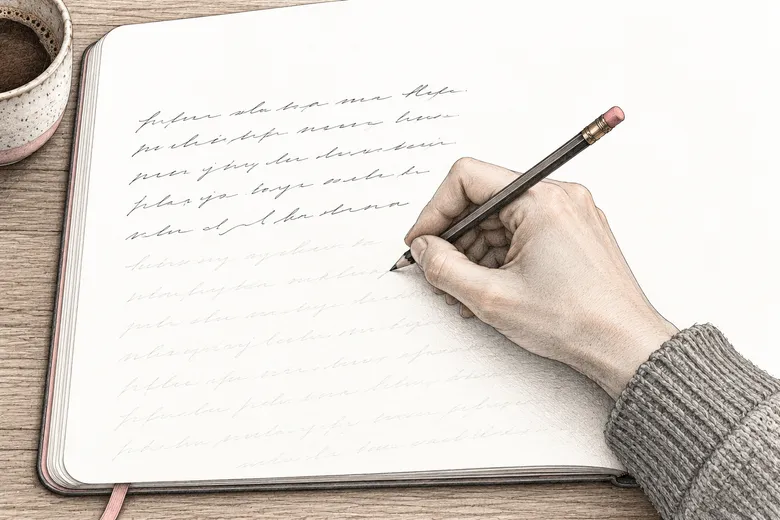
A hand writing in an open notebook, with faint marks becoming darker and more defined across the page.

If writing were just about transcribing the ideas we have in our heads, it would be easy. But writing doesn’t just reveal what we think; it enables us to have thoughts we wouldn’t have had otherwise. The process of writing exposes gaps in our understanding: we think we understand something, then we start writing and realize there are things we haven’t thought through. Learning to write clearly trains the brain to structure ideas logically and put them into words other people can easily grasp.

In my flagship keynote, Writing as a Superpower, I give students an electrifying vision of what learning to write makes possible: the ability to think clearly, express ideas with force, and change people’s minds. The swagger of being able to play with language. The supreme confidence of having a masterful command over words and syntax, conveying meaning with thrilling precision.

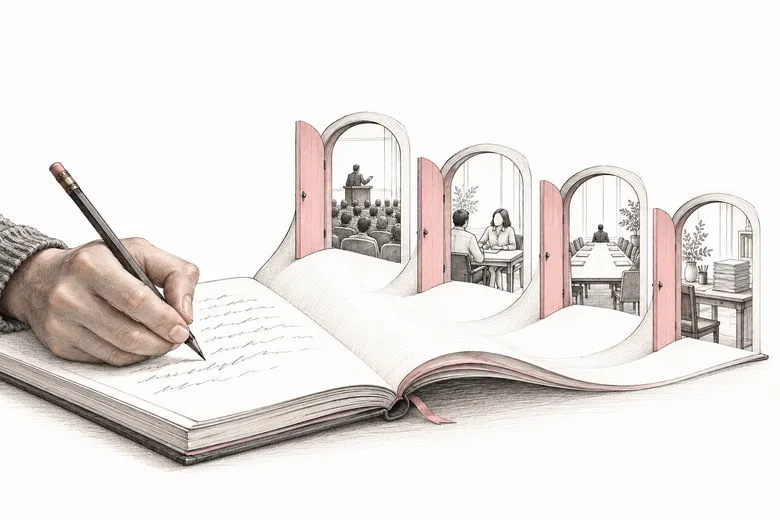
A hand writing in a notebook whose pages open into four pink doorways showing speaking, conversation, a meeting, and a finished manuscript.

The Three (Paradoxical) Principles of Socratic AI for Students

Move past the simple “cheating vs. not cheating” binary. Academic integrity is the bare minimum. The real question is whether you’re using AI in a way that makes you think more, not less.

School isn’t just about getting grades and credentials. Think about the kind of person you want to be when you graduate — and what you need to do to get there.

Jay Dixit teaching and guiding educators

1. Honor Human Creativity

The Principle

Human creativity is sacred. Writing, storytelling, and art are acts of creation, and we must never outsource them to AI.

The Paradox

AI doesn’t have to be a threat to creativity. Think of it not as a shortcut, but as a thinking partner that questions, probes, and pushes you to articulate your best ideas — a tool to help you surface, develop, and express what you think, without ever outsourcing the imagination, insight, and self-expression that make you human.
2. Embrace the Struggle

The Principle

Creation is born of struggle. Writing is hard — and that creative struggle is an inherent part of the process. The most powerful insights arise in those moments of discomfort and uncertainty when you’re staring down the blank page trying to figure out what comes next. Don’t retreat to letting AI generate your ideas or write for you when things get hard — those moments of productive struggle are when the learning happens.

The Paradox

In those moments of doubt when you’re lost and stuck, AI can be a sounding board — a thinking partner that listens as you talk out your ideas, asks you clarifying questions, and helps you find your way forward. You still need to do the hard work of figuring out what you think and finding the words to express it.

3. Aim Higher

The Principle

The goal isn’t to do less work while AI does your assignments for you. Nor is it to do the same work faster with less effort. The point is to reach higher: to think more deeply, build a stronger argument, and, with coaching and structure from AI, write something better than you thought you could.

The Paradox

The tool that could write your essay for you can also help you become a stronger thinker and writer. As a coach, project manager, and sounding board, AI can offer the encouragement, structure, and accountability to help you tackle ambitious projects and see them through — supporting you in doing the work without ever doing it for you.

Does the way you’re using AI make you think less, or think more? Does using AI get less of yourself onto the page — or more?

What a school can invite me to do

Talks and workshops for students on my Socratic approach to AI

I also teach faculty how to help their students use AI as a Socratic thinking partner, and advise school leaders on AI policy.

From my work at OpenAI

As OpenAI’s first Head of Community for Writers, I guided writers, educators, and students on how to use ChatGPT to support the creative process, not replace it. I authored OpenAI’s flagship education resources, including a “Student’s Guide to Writing with ChatGPT Without Generating Prose.”

August 2025: Inspiring Study Mode

At OpenAI, I championed the idea that ChatGPT should not just supply answers, but actively ask questions that push people to think more deeply. That idea helped inspire the Socratic questioning feature of ChatGPT Study Mode. Instead of spoon-feeding answers, Study Mode asks questions that lead students to connections and insights of their own.

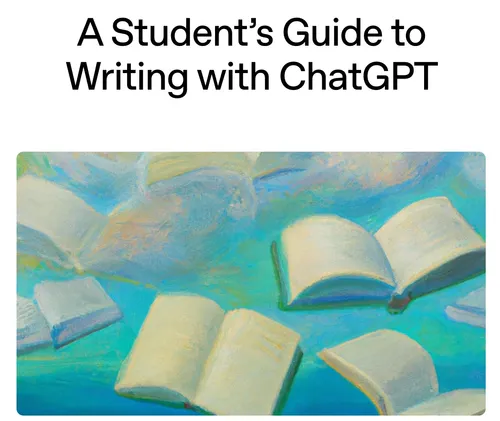
The cover of the OpenAI Student Writing Guide
A Socratic dialogue with ChatGPT
I discussed my Socratic approach to AI in a guide I wrote for students and writers on OpenAI.com.

Acclaim

“Fantastic. Absolutely the best presentation I’ve seen on how to actually use this stuff.”
Nick Gillespie, Editor-at-Large, Reason Magazine
“I love the way you think about AI.”
John Jamesen Gould, Founder and editor, The Signal; former digital editor, The Atlantic

Teach your students how to use AI to think more, not outsource thinking.