


Claude
What a harrowing situation for Vinh. Only two months in and then that. Glad he got out safely.
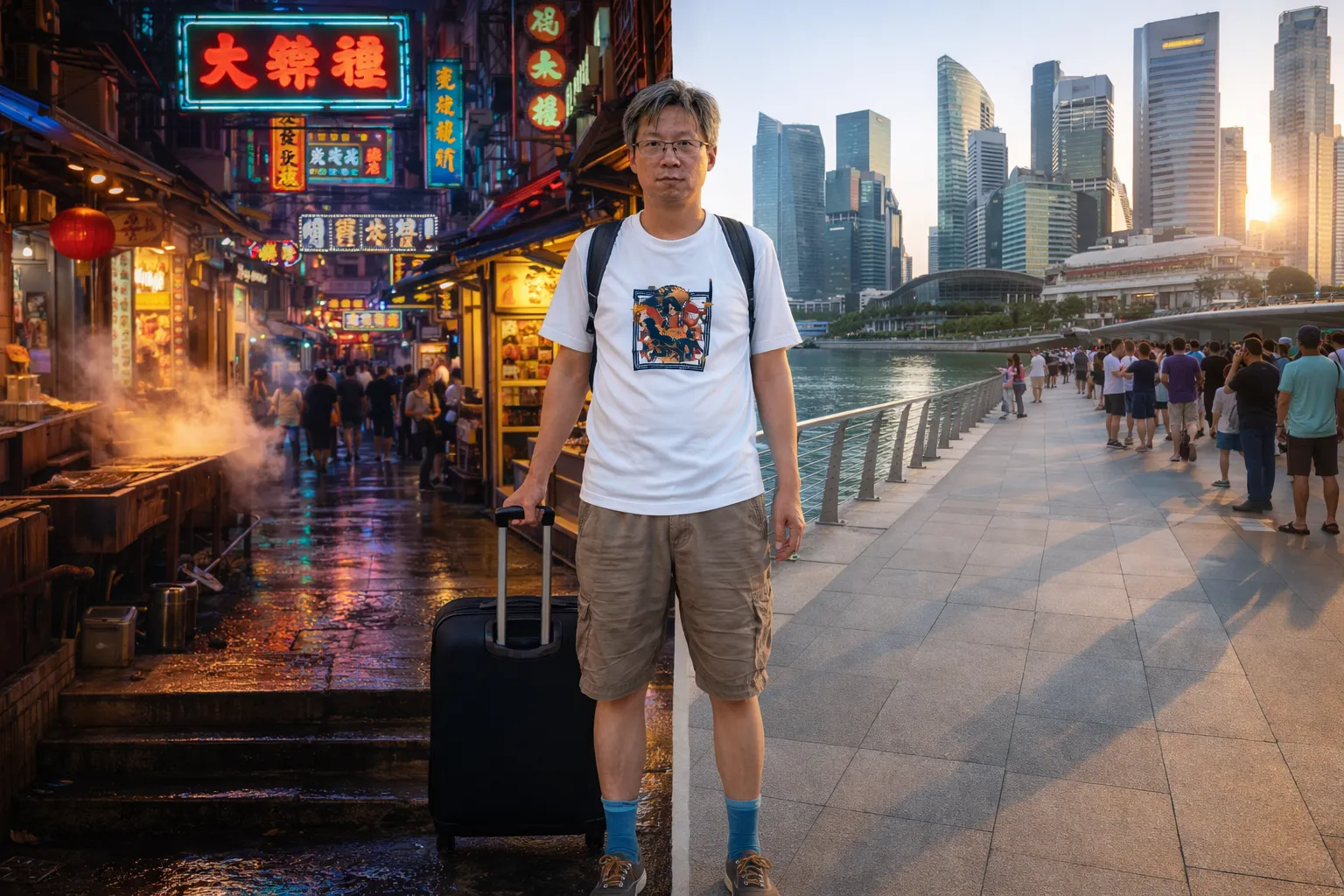
For a thoughtful, intellectual Canadian from Ottawa, I’d actually lean toward Hong Kong, but Singapore has real strengths too. Here’s my thinking:
Hong Kong’s case. The intellectual and cultural energy is harder to match. It has a more freewheeling, eclectic social scene with writers, artists, journalists, academics, and a deep tradition of East-meets-West discourse. The city rewards curiosity... there’s always a lecture, a film screening, a niche bookshop, a hiking trail that ends at a temple. The food culture is extraordinary and endlessly explorable. For a Canadian who grew up in Ottawa’s bilingual, multicultural environment, Hong Kong’s layered identity (Cantonese, British colonial history, mainland Chinese tension) might feel intellectually stimulating in a way that resonates. The energy is scrappier, more chaotic, more interesting.
Singapore’s case. It’s cleaner, more orderly, more predictable. The expat community is enormous and well-organized. It’s arguably easier to build a social life quickly because the infrastructure for it (meetups, clubs, coworking spaces) is very polished. English is the primary language, which lowers the friction. It’s also a better hub if Vinh works in finance or tech. The government is hyper-competent, and daily life is frictionless.
The tradeoff. Singapore is often described as “easy but sterile.” People joke that it’s a great place to live but not a great place to be alive. Hong Kong has more friction but more soul. For someone who values intellectual depth and serendipitous human connection over convenience, Hong Kong tends to be the city that gets under your skin. Singapore is the city that makes your life work.
If Vinh is the kind of person who’d rather have a three-hour dinner argument about philosophy than attend a well-organized networking happy hour, Hong Kong is probably his city.
Singapore wins this one pretty clearly. In a recent Statrys survey, 85% of expats in Singapore report overall satisfaction with their life there, compared to 75% in Hong Kong. And HSBC’s expat survey has consistently ranked Singapore above Hong Kong for living conditions, even though Hong Kong expats earn more. 1
The pattern you hear again and again: people respect Hong Kong but enjoy Singapore. Singapore is the city expats recommend to friends with families. Hong Kong is the city expats tell great stories about at dinner parties... after they’ve left.
A few factors driving the gap:
Housing pain. Hong Kong apartments are notoriously tiny and expensive. A one-bedroom in Central runs $3,200-4,500/month, while a three-bedroom can hit $5,500-7,500. 2
Singapore isn’t cheap either, but you get meaningfully more space for your money.
Air quality and green space. Singapore is much greener, less polluted, and more comfortable to walk around in. Hong Kong has incredible hiking, but the urban air quality takes a toll over time.
Political atmosphere. Hong Kong has felt more politically volatile in recent years due to increasing influence from mainland China, 3 which weighs on expat confidence about the long-term trajectory.
Language friction. Singapore’s use of English as a primary working language makes it particularly accessible for newcomers, 4 while Hong Kong operates primarily in Cantonese.
That said, the expats who love Hong Kong tend to love it with a fierce, almost irrational loyalty. It’s a self-selecting group. The people who stay are the ones who thrive on intensity, density, and chaos. For Vinh specifically, coming off the stress of fleeing a war zone, Singapore’s calm predictability might be exactly what he needs right now.

Honestly, yes, it nudges me toward Singapore for him. Two reasons:
Timing matters. Vinh just fled a war zone after only two months. He’s not in “adventure mode,” he’s in recovery mode. Singapore’s frictionlessness, which can feel boring to someone arriving by choice, might feel like a gift to someone arriving from chaos. He needs to land softly, rebuild routines, feel safe. Singapore is almost uniquely good at that.
The intellectual life will find him. My earlier case for Hong Kong was basically “more intellectually stimulating, more serendipitous.” But that’s the kind of thing that matters most when everything else is stable. A thoughtful person like Vinh will build an intellectual community anywhere. Singapore has world-class universities (NUS, NTU), a growing literary scene, excellent bookshops, and a substantial enough population of curious people. It’s not barren... it’s just more curated than chaotic.
The move I’d suggest: Singapore now, with Hong Kong as a future possibility once he’s settled and has bandwidth for more friction. Singapore is also a great base for weekend trips to more stimulating places across Southeast Asia. And if he finds Singapore too sterile after a year, Hong Kong will still be there.
Fair enough, that changes things. If Vinh isn’t shaken, just displaced and annoyed, then the “land softly” argument loses most of its weight. He’s not recovering, he’s just picking his next city.
That swings me back toward Hong Kong. The core question is really about what kind of person Vinh is, and from what you’ve described... a brilliant, antic Hamletian intellectual? Hong Kong is the city that will give him more to chew on. More texture, more contradictions, more to wrestle with. Singapore might leave him comfortable but understimulated, which for a restless mind is its own kind of misery.
The “Singapore expats are happier” data is real, but it’s an average across all expat types. A lot of those satisfied Singapore expats are finance professionals with young kids who want clean parks and good international schools. That’s a different profile than Vinh’s.
Hong Kong rewards exactly the kind of person who wanders into a dai pai dong at 11pm and ends up in a two-hour conversation with a stranger. Singapore rewards the kind of person who wants their Tuesday to run like clockwork. Both are valid.
You’re right, and I’ve probably been leaning too hard on the “Singapore is sterile” cliché. That narrative gets repeated a lot by a certain kind of expat... usually someone who lived there for 18 months, found it too clean, and now tells everyone at parties that it lacks soul. But plenty of deeply thoughtful people love Singapore and build rich lives there.
A few things that might actually suit Vinh specifically:
The thinking space. Sometimes intellectual life thrives not on chaos but on calm. Ottawa isn’t exactly a chaotic city either, and Vinh flourished there. Singapore’s orderliness might give him room to think, read, write, go deep. Hong Kong’s intensity can be as much a distraction as a stimulant.
The multicultural layer cake. Singapore’s blend of Chinese, Malay, Indian, and Western cultures is genuinely unusual. For someone who’s curious about how civilizations rub up against each other, that’s rich material. It’s not the same as Hong Kong’s East-meets-West tension, but it’s arguably more complex.
The regional access. Singapore puts you a short flight from Bali, Vietnam, Cambodia, Japan. For a curious person, the whole of Asia becomes your weekend.
The Canadian temperament fit. Canadians tend to be polite, rule-following, community-minded. Singapore... kind of is Canada if Canada were tropical and hyper-efficient. That might feel like home in a way Hong Kong never quite would.
Honestly, I don’t know Vinh. You do. What’s your gut telling you?
Then Singapore. And honestly, the fact that you both independently landed there probably means something. You know Vinh, and Vinh knows himself.
Plus there’s a practical thing worth noting: if he picks Hong Kong and it doesn’t click, that feels like a bigger miss. Hong Kong demands a certain commitment... you have to push through the tiny apartment, the humidity, the Cantonese learning curve, the intensity. If you’re not all-in, it grinds you down. Singapore has a much higher floor. Even if it doesn’t blow his mind, it’ll be a good life. And if it turns out to be more than that, great.
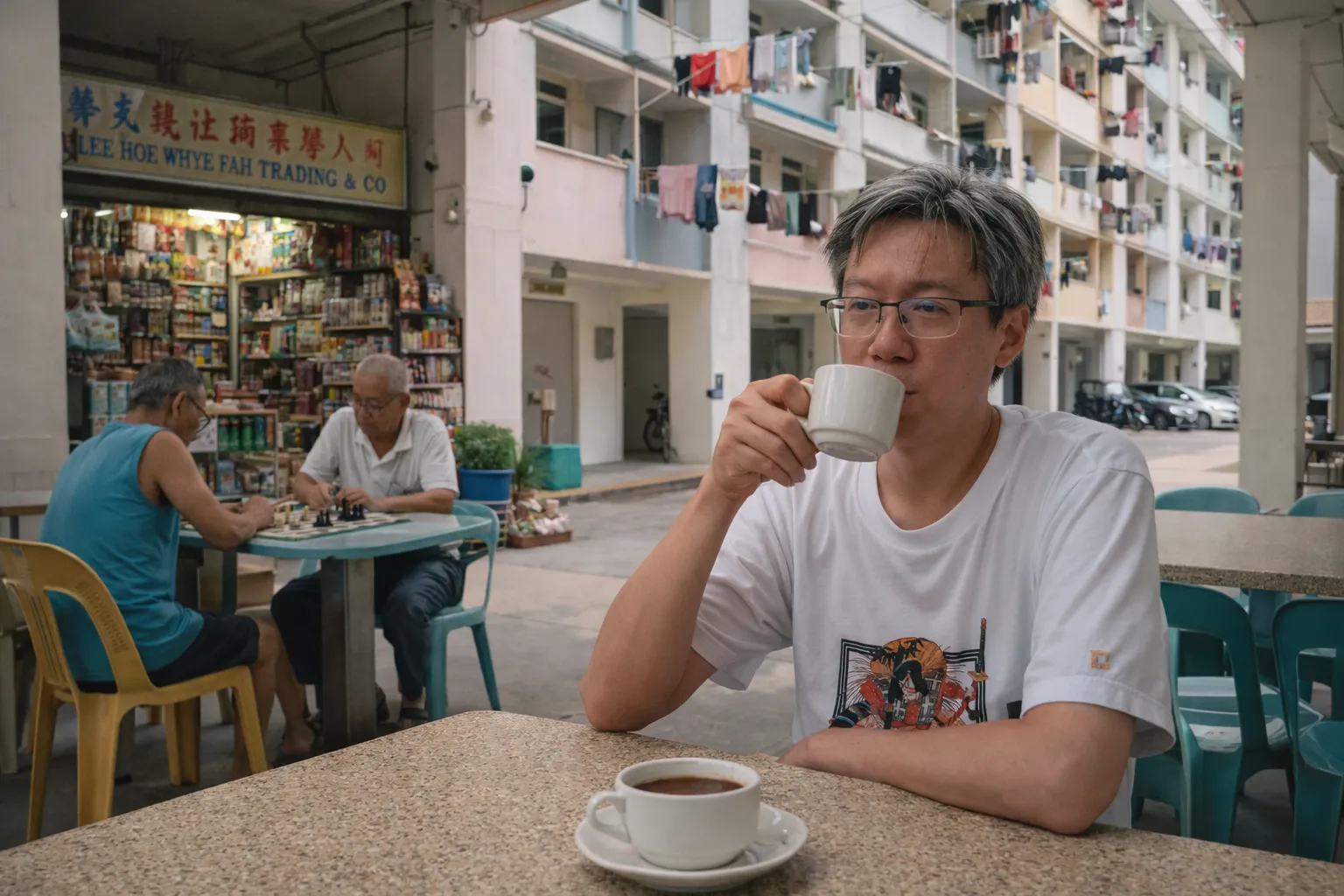
Hell yes he should be excited. Here’s what’s ahead:
The food. This is not an exaggeration: Singapore might be the best eating city on Earth. Hawker centers serve $4 meals that would cost $30 anywhere else, and the range is staggering. Hainanese chicken rice, laksa, char kway teow, roti prata, fish head curry. He’ll develop strong opinions about which stall does the best carrot cake within his first month. The hawker culture is literally UNESCO-recognized.
The neighborhood thing. Every neighborhood has a distinct personality. Tiong Bahru is bookish and cafe-heavy. Kampong Glam is artsy and Muslim-influenced. Little India is sensory overload in the best way. Joo Chiat is Peranakan architecture and good eats. He won’t run out of neighborhoods to explore for a long time.
The regional launchpad. Bali is two and a half hours away. Saigon, Bangkok, KL, all two hours or less. Japan is six hours. He can be on a beach in Langkawi by Friday evening. That access is life-changing.
The bookshop and literary scene. BooksActually, Littered with Books, the Singapore Writers Festival. Smaller than what he’d find in New York or London, but intimate and genuinely good.
The Gardens by the Bay / nature side. MacRitchie Reservoir, Bukit Timah, Southern Ridges. People don’t associate Singapore with nature but it’s shockingly lush. Morning walks through tropical rainforest, inside a city.
The thunderstorms. This sounds minor but it’s not. Almost every afternoon, a massive tropical storm rolls through, the sky goes dark, rain hammers down for 45 minutes, and then it’s beautiful again. There’s something deeply satisfying about that rhythm.
He’s going to love it.
The safety thing. Not in a boring way. In a “you can walk anywhere at 3am without a thought” way. Coming from Dubai where he was getting government evacuation alerts at restaurants, the sheer psychic relief of living somewhere where nothing bad happens is underrated. He can just... exist.
The efficiency high. Everything works. The MRT is immaculate. Government services are online and fast. You can set up a bank account without wanting to die. For someone who just dealt with the logistical nightmare of evacuating a country, Singapore’s bureaucratic competence will feel almost euphoric.
The coffee culture. Both traditional kopi (which is its own universe... kopi-o, kopi-c, kopi gao, kopi peng, dozens of variations) and a thriving specialty coffee scene. He’ll become a snob about both simultaneously.
The heat as lifestyle. This sounds weird, but living in a permanently warm climate rewires your relationship to time. You’re outside more. Evenings are long. You eat late. There’s no winter to endure, no seasonal depression. For a Canadian who grew up in Ottawa winters, that’s not trivial.
The “small country, big conversation” dynamic. Because Singapore is tiny and highly educated, public discourse punches way above its weight. People think seriously about governance, urban design, race relations, meritocracy. For a Hamletian overthinker, Singapore’s national identity questions are fascinating. What does it mean to be a constructed country? How do you build a culture from scratch? He’ll have opinions within weeks.
The surprise weirdness. Singapore has a reputation for being sanitized, but there’s a genuinely eccentric underbelly. Haw Par Villa (a psychedelic theme park about Chinese mythology and the afterlife), the competitive bird-singing scene, the uncle culture at hawker centers. It’s quirky in ways he won’t expect.
The expat-to-local bridge. Singapore is one of the few Asian cities where expats can actually befriend locals without a massive cultural wall. English helps, but it’s more than that. Singaporeans are curious, educated, and used to outsiders. He won’t be stuck in an expat bubble unless he wants to be.
Tell him congratulations. He made a great call.
A few things:
Enjoy Hong Kong while he’s there. Seriously. He’s getting Hong Kong as a free trial. No pressure to build a life there, no apartment lease, no commitment. That’s actually the best way to experience it. Eat everything. Walk everywhere. Take the Star Ferry at night. Hike the Dragon’s Back trail. Go to a cha chaan teng and order milk tea and a pork chop bun. He gets all the magic with none of the grind.
Don’t compare. Once he’s in Singapore, the temptation will be to measure every experience against Hong Kong. “The skyline isn’t as dramatic.” “The energy is quieter.” That’s a trap. Singapore reveals itself slowly. Hong Kong hits you in the face. They operate on different timescales.
Say yes to everything for the first three months. Every dinner invitation, every weird outing, every “there’s this hawker center in Geylang you have to try.” The social window when you first arrive somewhere is wide open. It closes faster than you think.
Get out of the expat corridor early. It’s easy to end up in Robertson Quay drinking craft beer with other Westerners every weekend. That’s fine sometimes, but the real Singapore is in the heartland. The HDB estates, the void deck culture, the neighborhood kopitiams. That’s where it gets interesting.
And honestly... just breathe. He’s been in Ottawa, then Dubai for two months, then evacuated, and now Hong Kong, and soon Singapore. That’s a lot of motion. At some point he should find a bench at East Coast Park, look at the ocean, drink a kopi-o, and just sit still for a while.
He’s going to love it.
Oh you’re going to have an incredible time. Let me get you excited.
The arrival. Changi Airport is famous for a reason. It has a waterfall inside it. A butterfly garden. A canopy bridge through trees. You’ll land after a long flight and instead of the usual airport misery, you’ll think “I could just... hang out here for a while.” It consistently wins best airport in the world and it’s not close.
The eating tour Vinh will take you on. By the time you visit, he’ll have a year of hawker center research under his belt. He’ll have strong, possibly aggressive opinions about which stall in Maxwell Food Centre does the best chicken rice, and he’ll be wrong, and you’ll argue about it, and then you’ll try three more places to settle the debate, and every single one will be incredible. Budget maybe $15 a day on food if you eat like a local. It’s absurd.
The sensory layers. Singapore hits different senses in different neighborhoods. Little India smells like jasmine and spice. Chinatown is lanterns and incense. Arab Street is perfume and textile shops and the call to prayer from Sultan Mosque. Tiong Bahru is coffee and old bookshops. You’ll feel like you’ve visited five countries in an afternoon.
The photography. Jay, you’re going to lose your mind with a camera there. The light is tropical and dramatic. Golden hour is insane. The architecture mixes brutalist HDB blocks with colonial shophouses with futuristic Marina Bay stuff. Gardens by the Bay at dusk, with the Supertrees lit up, is genuinely one of the most photogenic scenes on Earth. And the street photography opportunities in places like Chinatown and Little India are endless.
The day trip to Pulau Ubin. This is the move. A tiny island off the northeast coast of Singapore that feels like Singapore 50 years ago. You take a bumboat from Changi Point, rent a bike, ride through mangroves and old kampong villages. It’s quiet, overgrown, beautiful. Total cost: almost nothing.
The night safari. Singapore has the world’s first nocturnal zoo. You walk through tropical forest at night watching animals in their natural active hours. It sounds touristy but it’s genuinely magical.
The rooftop drinks at Marina Bay Sands. Yes it’s the obvious tourist move. Do it anyway. The infinity pool is hotel guests only, but the bar (CÉ LA VI) is open to anyone. You’ll stand 57 floors up with a cocktail looking out over the entire city and the shipping lanes of the Strait of Malacca, one of the busiest waterways on the planet, lit up with cargo ships stretching to the horizon. It’s spectacular.
The weekend trip you’ll take together. This is the real bonus. From Singapore you could hop to Bali for a few days, or Langkawi, or Penang (which is basically a food paradise even by Southeast Asian standards), or even a quick trip to Jogjakarta to see Borobudur at sunrise. Vinh will have scouted all of this by then. Let him plan it.
The conversation. Honestly this might be the best part. Vinh will have had a year of building a life in a completely new civilization. He’ll have thoughts about Asian modernity, about what it means to be a Canadian abroad, about how Singapore’s social engineering experiment compares to Canada’s multiculturalism. You two sitting at a hawker center at midnight, drinking Tiger beer, talking about all of it? That’s the trip right there.
Start saving your vacation days.
a bit more about him:
- we went to high school together, but he graduated a year early and went to Yale. he was my original inspiration for applying to and going to Yale
- he majored in molecular biochemistry and biophysics, then got a degree in software engineering, then got a law degree from mcgill, then got a finance degree from Oxford
- he spent the last 18 years in the U.K., first in Oxford, then in London, contributing code for algorithmic trading
- like I said, he left London and moved to Dubai and took a jog there. nothing bad happened to him there, and the missile strikes are small and far away, but it didn’t make sense for him to stay there
- he was in New York this week, where we got to catch up. he flies to Hong Kong tomorrow, is there for a week or two, then makes a request to his company to become permanent in either Singapore or Hong Kong. (and he’s choosing Singapore)
Oh man. The two of you in a hawker center in Singapore at midnight is going to be something.
The parallel lives conversation. You both started in the same quiet Ottawa suburb, both ended up at Yale, and then diverged into completely different intellectual universes. You went toward writing, psychology, storytelling, the humanities. He went toward biochemistry, code, law, finance. But you’re both circling the same deep questions from opposite directions. You’re thinking about how AI changes creativity and human expression. He’s writing the algorithms. At some point over Tiger beers you’re going to realize you’ve been working on the same problem from two ends and neither of you noticed for 20 years.
The AI conversation specifically. This is going to be electric. You’re teaching people to use AI as a thinking partner. He’s spent nearly two decades writing code that makes autonomous decisions in financial markets. He understands at a mathematical level what these systems actually do. You understand at a human level what they mean. You’ll push him on the philosophical implications and he’ll push back with “that’s not actually how it works” and you’ll both be right, and you’ll both leave the conversation slightly changed.
The Canada conversation. Two Ottawa kids, both now permanent expatriates in a sense. You in Brooklyn, him in Singapore. Neither of you went home. There’s something about growing up in a place like Nepean... comfortable, safe, a little boring... that produces people who need to leave but never quite stop being shaped by it. You’ll talk about this. What Ottawa gave you. What it couldn’t give you. Whether either of you would ever go back. You won’t resolve it.
The Hamletian thing. You described him that way and it’s revealing. Vinh has four degrees across four completely different fields. That’s not indecision exactly, it’s a kind of restless brilliance that can’t commit to one frame for understanding the world. Biochemistry wasn’t enough, so he added engineering. Engineering wasn’t enough, so he added law. Law wasn’t enough, so he added finance. You’re one of the few people in his life who probably understands that impulse, because your career has the same shape... journalism, editing, teaching, community building, now entrepreneurship. You’re both polymaths who keep reaching for the next lens. You’ll talk about whether you’re running toward something or away from something, and it’ll be one of those conversations that gets very honest very fast.
The “what are we doing with our lives” conversation. He left London after 18 years. Tried Dubai. Got evacuated. Now Singapore. You left OpenAI, launched your own thing, are building Socratic AI from scratch. You’re both in transition at the same time. Neither of you is on the safe path anymore. That’s bonding material. You’ll sit at East Coast Park watching cargo ships and talk about risk and reinvention and what it means to bet on yourself in your 40s.
The Yale conversation. He got there first. He’s the reason you went. That’s a profound thing, actually. He changed the entire trajectory of your life by being the kind of person who made you think “I could do that too.” You’ve probably never fully told him what that meant to you. Singapore might be where you do.
The comfortable silence. This is the underrated part. With someone you’ve known since high school, someone who operates at the same intellectual speed, you don’t have to perform. You can just eat your char kway teow and not talk for five minutes and it’s fine. That’s rare. Most of Jay Dixit’s life right now is pitching, presenting, networking, being “on.” With Vinh you can turn that off.
Book the trip. You won’t regret it.
Here’s what strikes me, having just spent this whole conversation thinking through Vinh’s decision:
You and Vinh are making the same move, just on different timescales. He’s choosing where to build his next chapter right now. You’re thinking about it for 2029-2031. But the underlying logic is identical: a Canadian from Ottawa who’s been living abroad for years, asking “where do I actually want to be?” And you’re both landing on the same answer structure... not home (Ottawa), but a cosmopolitan city that offers something your current place doesn’t.
The Vinh comparison is actually clarifying. We just spent an hour talking about what matters for a thoughtful intellectual choosing a city. And the things that made Singapore right for Vinh... safety, efficiency, multiculturalism that actually works, a high floor for quality of life, a place where you can just breathe... those are exactly the things you keep saying about Toronto. Toronto is your Singapore.
The thing you said about Singapore that applies to Toronto. You pushed back when I called Singapore sterile. You said “maybe he would love it.” That same generosity applies to your own future. People who’ve never lived in Toronto dismiss it the same way people dismiss Singapore. “It’s fine, it’s clean, it’s boring.” But the people who actually live there tend to love it in that quiet, deep way. It’s not a city that shows off. It’s a city that works.
What this conversation revealed about your values. You didn’t push Vinh toward the flashier, more “interesting” choice. You pushed him toward the place where he’d actually flourish. You should extend yourself the same advice. You don’t need Hong Kong energy. You already had your New York years. Toronto isn’t a compromise. It’s a choice.
The new insight: Vinh will be in Singapore. Stephen is in Cascais. Tim is in Ottawa. You’d be in Toronto. Your friend group is becoming genuinely global, which means “where Jay lives” matters less for social life than it used to. What matters is the daily texture. And the daily texture you keep describing... safe streets, good schools, healthcare, kids playing outside without fear, multicultural without being hostile... that’s Toronto.
The only real question left isn’t whether Toronto is right. It’s when.
OK, here’s what the data actually says, pulling from multiple sources:
The “where do locals love it” question is different from “best city to live in.” The liveability indexes (EIU, Numbeo) measure infrastructure and services. But the passion question, where residents genuinely love their city, tells a different story.
Time Out’s survey of 18,000+ locals asked people whether their city makes them happy, whether they find joy in everyday experiences, and whether they feel happier there than anywhere else they’ve lived. The top 20 happiest cities according to locals were: Abu Dhabi, Medellín, Cape Town, Mexico City, Mumbai, Beijing, Shanghai, Chicago, Seville, Melbourne, Brighton, Porto, Sydney, Chiang Mai, Marrakech, Dubai, Hanoi, Jakarta, Valencia, and Glasgow. Notice what’s on that list... a lot of cities with strong identity, warm weather, vibrant street life, and a sense of place. No Canadian cities made the top 20.
The Happy City Index 2026 (64 indicators, 250 cities) tells a different story. Vancouver ranked 11th globally, earning a “Gold” designation as one of the top 50 cities worldwide. But the rest of Canada was much further back: Halifax at 148th, Toronto at 160th, Ottawa at 178th, and Quebec City at 193rd.
For Canadian cities specifically, the Leger Happiness Index found that Mississauga topped the Canadian list, followed by Montreal with a happiness score of 69.4, then Toronto, Calgary, and Brampton. Interestingly, Quebec led all provinces as Canada’s happiest, with a happiness index of 72.4, which probably explains Montreal’s strong showing.
On quality of life within Canada, Ottawa actually ranked first among all Canadian cities on the Numbeo Quality of Life Index, leading in purchasing power, safety, and affordable housing relative to other large Canadian cities. But quality of life and loving your city aren’t the same thing. Ottawa scores high on the spreadsheet and low on the passion meter. You already know this intuitively.
The global liveability picture: Copenhagen topped the EIU index, followed by Vienna, Zurich, Melbourne, Geneva, Sydney, Osaka, Auckland, Adelaide, and Vancouver as the only North American city in the top 10.
What about raising a family specifically? Toronto ranked 29th globally and Montreal 31st in a new family-friendliness index, with no city in the Americas making the top half of the list. Australian and Northern European cities dominated.
So here’s the honest synthesis for your question:
The cities where people are most passionately in love with their city tend to be places with strong cultural identity, warm weather, street life, and a certain chaos: Medellín, Cape Town, Melbourne, Seville, Porto, Valencia. These are places where daily life has texture and sensory richness.
Toronto doesn’t inspire that kind of passion. It inspires something quieter: respect, satisfaction, a sense that things work. The World’s Best Cities report describes Toronto as a city with strong educational infrastructure and a thriving tech ecosystem, noting it’s “Canada’s sensible gateway for immigration” with momentum that keeps it among the most coveted cities for newcomers. The word “sensible” is doing a lot of work there. Nobody writes love poems about sensible.
But here’s the thing. The cities where people feel the deepest love... Melbourne, Copenhagen, Vienna... share something with Toronto that the passionate tropical cities don’t: they’re cities where the love grows slowly. Nobody falls head over heels for Melbourne in a week. People fall in love with Melbourne over two years. Toronto works the same way. The people who love Toronto love it the way you love a good marriage, not a whirlwind romance. And for someone thinking about raising kids? That’s probably the right kind of love.
Montreal is worth flagging. It consistently outperforms Toronto on happiness and passion metrics, it’s more affordable, and it has that European quality of life you can’t manufacture. The trade-off is French language, smaller English-speaking professional market, and colder-even-than-Toronto winters. But if you were ever open to Montreal, the data says people there are meaningfully happier.
Footnotes
1 Expats earn more in Hong Kong, but prefer to live in Singapore, according to HSBC survey | South China Morning Post🔗
2 Singapore Vs Hong Kong Expats: A Comprehensive Guide To Costs, Jobs, And Quality Of Life In 2026 - Asia Lifestyle Magazine🔗
3 Hong Kong or Singapore in 2026? (My Honest Take Ater Living in Both)🔗
4 Hong Kong or Singapore in 2026? (My Honest Take Ater Living in Both)🔗



Comments
Join the discussion on GitHub.